
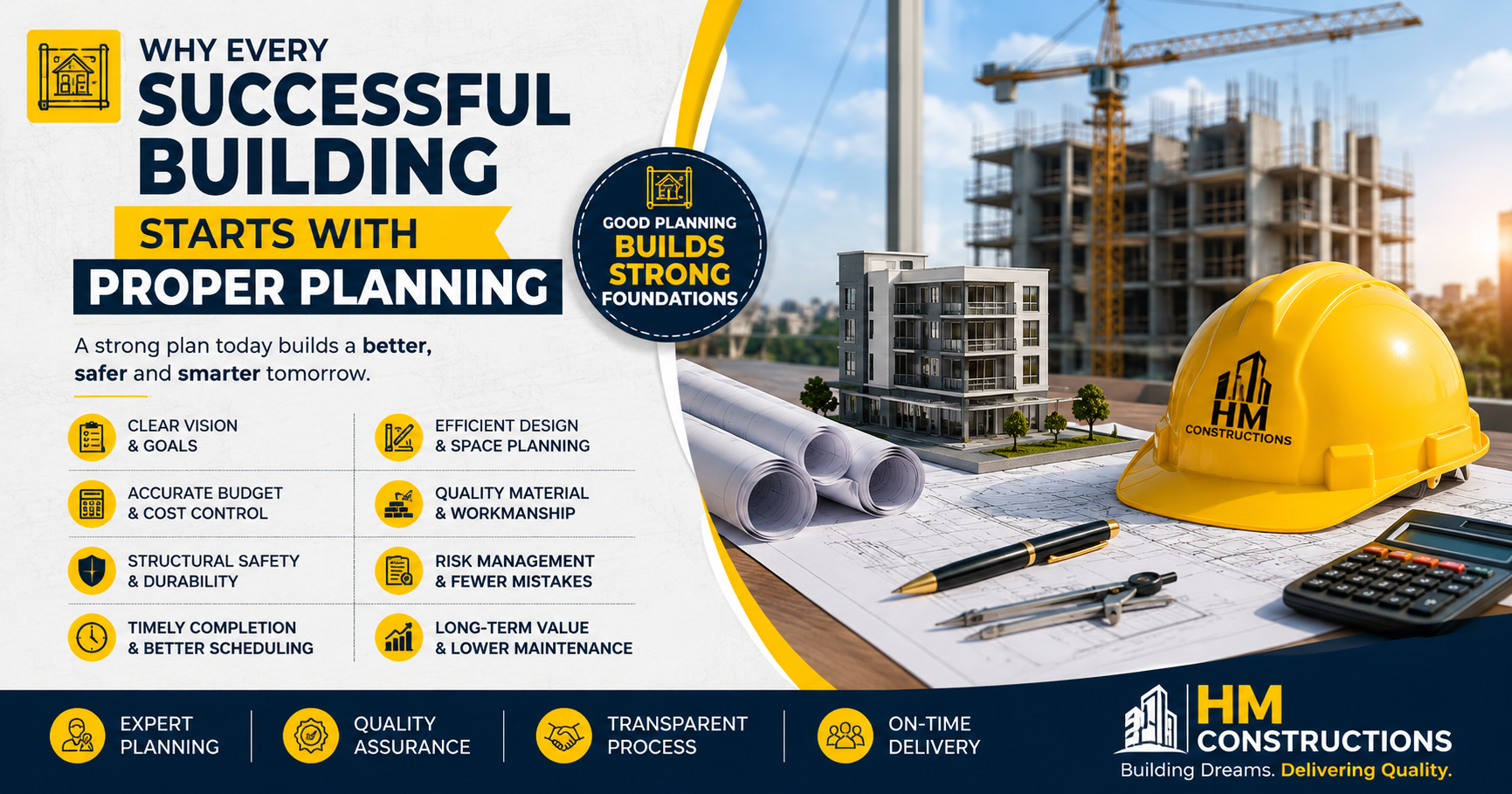
📐 Why Every Successful Building Starts with Proper Planning
When people think about construction, they often imagine bricks, cement, steel, and heavy machinery. However, the true foundation of every successful building is proper planning. Long before the first brick is laid, a well-planned project determines how efficiently the building will be constructed, how much it will cost, how long it will take, and how well it will perform for decades to come.
Whether you’re building a dream home, a commercial complex, an office, or an industrial facility, investing time in planning is one of the smartest decisions you can make. Proper planning minimizes risks, reduces unnecessary expenses, and ensures that every stage of construction is executed with precision.
Why Planning Matters
1. Defines Clear Project Goals
Every successful project begins with understanding the client’s vision. Planning helps define the purpose of the building, the required spaces, future expansion possibilities, budget expectations, and design preferences. A clear roadmap ensures that everyone involved works toward the same objective.
2. Creates an Accurate Budget
One of the biggest reasons construction projects exceed their budgets is inadequate planning. A detailed estimate prepared before construction begins helps account for:
- Material costs
- Labour expenses
- Equipment and machinery
- Government approvals
- Interior and finishing work
- Utility connections
- Contingency funds for unforeseen situations
A realistic budget reduces financial surprises and helps clients make informed decisions throughout the project.
3. Selects the Right Design
Planning allows architects and engineers to create a design that is not only attractive but also practical, safe, and efficient. A thoughtfully designed building improves natural lighting, ventilation, structural stability, energy efficiency, and future maintenance.
4. Ensures Structural Safety
Every building must safely support its own weight and withstand environmental conditions such as wind, rainfall, and, where applicable, earthquakes. During the planning phase, structural engineers determine the appropriate foundation type, column and beam sizes, slab thickness, and reinforcement details based on soil conditions and the intended use of the building.
5. Improves Construction Scheduling
A structured construction schedule helps coordinate excavation, foundation work, structural construction, electrical and plumbing installations, finishing, inspections, and handover. Proper sequencing minimizes delays and keeps the project moving efficiently.
Common Problems Caused by Poor Planning
- Budget overruns
- Construction delays
- Structural issues
- Water leakage and drainage problems
- Poor space utilization
- Frequent repairs and maintenance
- Material wastage
- Safety risks
- Difficulty obtaining approvals
- Reduced property value
-
- ✔ Site inspection and feasibility assessment
- ✔ Detailed project estimation and budgeting
- ✔ Architectural and structural coordination
- ✔ Construction scheduling and milestone planning
- ✔ Material selection and quality assurance
- ✔ Safety and compliance planning
- ✔ Regular project monitoring and transparent client updates
This structured approach helps us deliver projects that are completed on time, within budget, and built to the highest quality standards.
Final Thoughts
A successful building doesn’t happen by chance—it is the result of thoughtful planning, skilled engineering, quality materials, and disciplined execution. Proper planning transforms ideas into safe, durable, and functional structures while saving time, reducing costs, and minimizing risks.
If you’re planning to build a home, office, commercial space, or renovate an existing property, start with a strong plan. The quality of your planning today will determine the strength, efficiency, and value of your building for years to come.
Related Articles

🛡️ How Do I Know If My Builder Is Using Quality Materials?
Building a home or commercial property is one of the biggest investments you'll ever make. While the final fin...

💰 Is Expensive Material Always Better? The Truth Every Homeowner Should Know
💰 Is Expensive Material Always Better? The Truth Every Homeowner Should Know When planning a home or commerci...
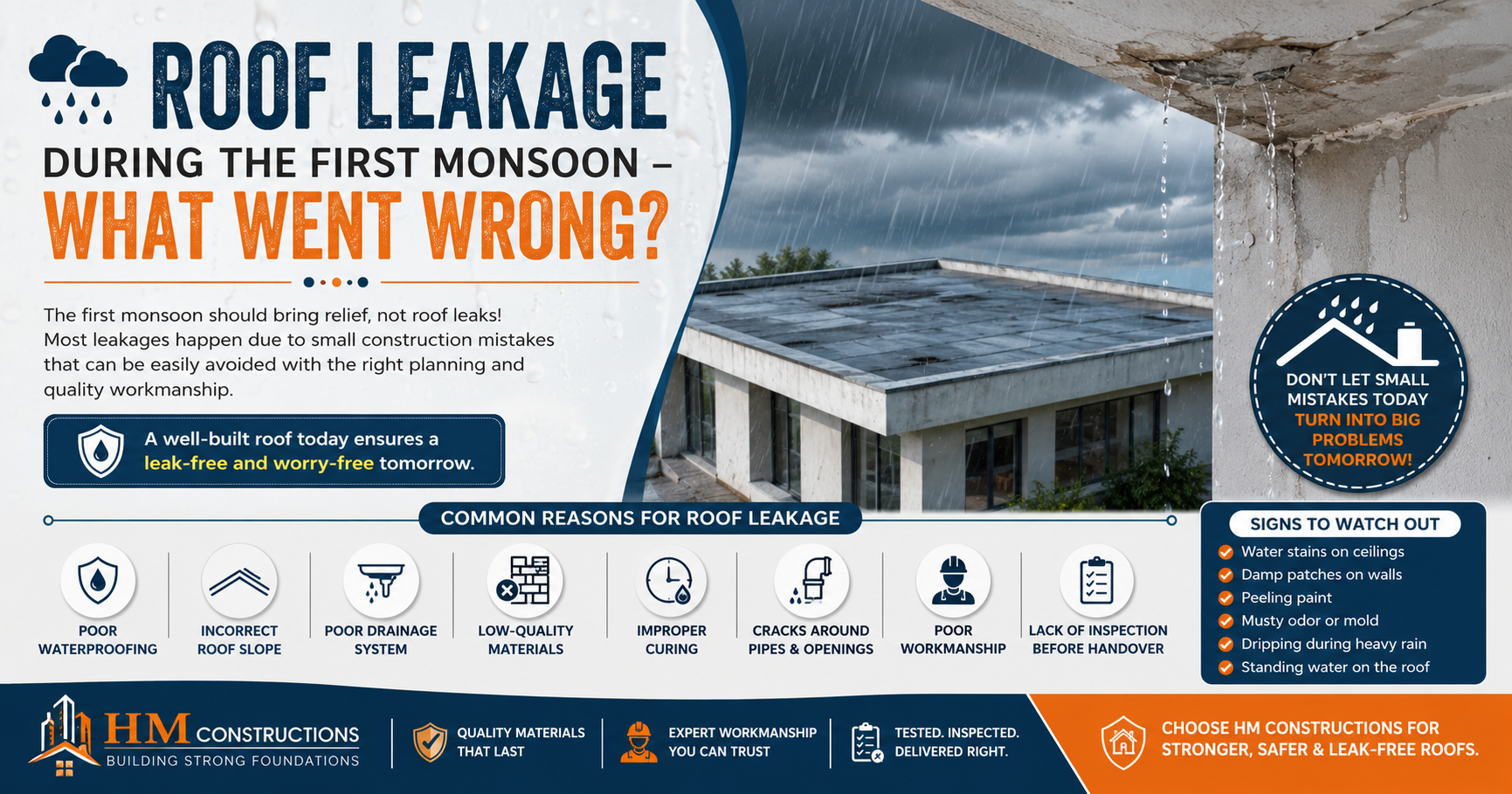
🌧️ Roof Leakage During the First Monsoon – What Went Wrong?
🌧️ Roof Leakage During the First Monsoon – What Went Wrong? The first monsoon after moving into a new home sh...