
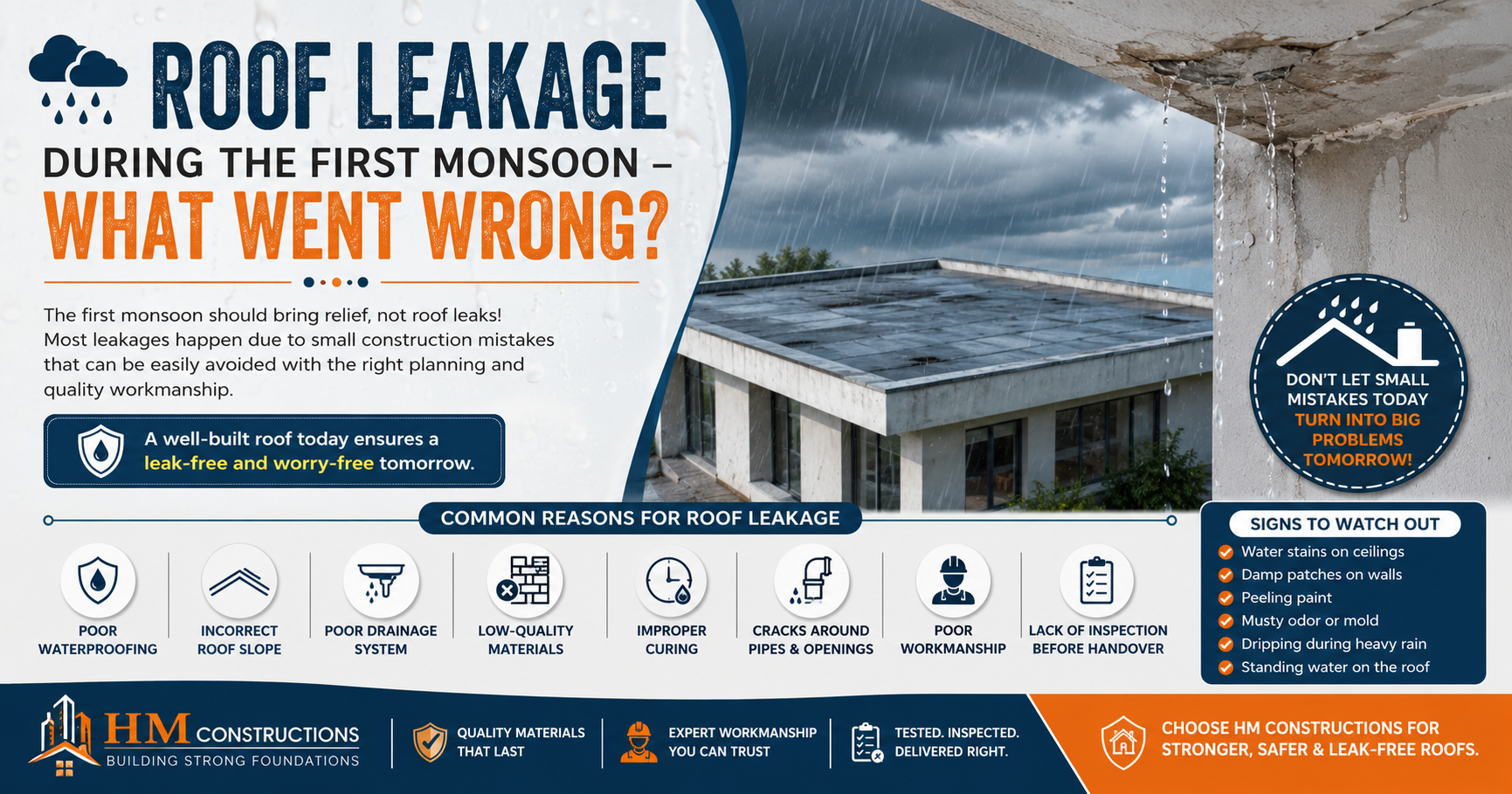
🌧️ Roof Leakage During the First Monsoon – What Went Wrong?
The first monsoon after moving into a new home should bring comfort and peace of mind—not water stains on the ceiling, damp walls, or leaking roofs. Unfortunately, roof leakage is one of the most common complaints homeowners face, and in most cases, it is preventable. The problem often starts during construction due to poor planning, low-quality materials, or improper workmanship.
Why Do Roofs Leak During the First Monsoon?
1. Poor Waterproofing
Waterproofing is one of the most critical steps in roof construction. If low-quality waterproofing materials are used or the application is done incorrectly, rainwater can seep into the concrete and eventually reach the ceiling.
Signs:
- Damp patches on ceilings
- Peeling paint
- Water dripping during heavy rainfall
How HM Constructions Prevents It:
- Uses high-quality waterproofing membranes and coatings.
- Ensures proper surface preparation before application.
- Performs waterproofing in multiple layers where required.
- Conducts water ponding tests before project handover.
2. Incorrect Roof Slope
A flat roof without the proper slope allows rainwater to collect on the surface. Standing water gradually weakens the waterproofing layer and finds its way through tiny cracks.
Problems Caused:
- Water ponding
- Increased structural stress
- Faster deterioration of roof surfaces
- Persistent leakage over time
Our Solution:
Every roof is designed with an appropriate slope to ensure efficient rainwater drainage and prevent water accumulation.
3. Poor Drainage System
Even the best roof can leak if rainwater cannot drain properly. Blocked or undersized drainage outlets cause water to back up and enter weak points in the roof.
Common Issues:
- Insufficient rainwater outlets
- Blocked drain pipes
- Poorly planned drainage layout
- Overflow during heavy rain
HM Constructions’ Approach:
- Designs efficient rainwater drainage systems.
- Installs properly sized outlets.
- Ensures easy maintenance access.
- Tests drainage performance before handover.
4. Low-Quality Construction Materials
Using substandard cement, waterproofing chemicals, sealants, or roofing sheets may reduce initial costs but often leads to expensive repairs later.
Possible Consequences:
- Early cracks
- Water seepage
- Rusting of steel reinforcement
- Reduced roof lifespan
Our Commitment:
We use only trusted, high-quality materials that meet industry standards for durability and weather resistance.
5. Improper Concrete Curing
Concrete gains strength only when cured correctly. Insufficient curing can cause shrinkage cracks, creating pathways for water infiltration.
Effects:
- Surface cracks
- Reduced concrete strength
- Water penetration
- Long-term durability issues
What We Do:
Our team follows recommended curing practices to achieve optimal concrete strength and minimize cracking.
Warning Signs of Roof Leakage
Don’t ignore these early signs:
- Water stains on ceilings
- Damp patches on walls
- Peeling paint
- Mold or mildew growth
- Musty odors
- Cracks near the roof slab
- Dripping water during rain
- Standing water on the roof after rainfall
Addressing these symptoms early can prevent more extensive damage.
How Homeowners Can Prevent Roof Leakage
- Schedule roof inspections before every monsoon.
- Keep rainwater outlets and gutters free from debris.
- Repair small cracks promptly.
- Avoid drilling into the roof without proper waterproof sealing.
- Use high-quality waterproof coatings when maintenance is required.
- Choose experienced construction professionals for new projects and renovations.
-
Final Thoughts
Roof leakage during the first monsoon is rarely caused by the rain itself—it is usually the result of overlooked construction mistakes. Investing in quality materials, proper waterproofing, effective drainage, and skilled workmanship from the beginning saves significant repair costs and stress in the future.
Related Articles

🛡️ How Do I Know If My Builder Is Using Quality Materials?
Building a home or commercial property is one of the biggest investments you'll ever make. While the final fin...

💰 Is Expensive Material Always Better? The Truth Every Homeowner Should Know
💰 Is Expensive Material Always Better? The Truth Every Homeowner Should Know When planning a home or commerci...

🧑🔧 The Importanceof Skilled Labour in Construction Quality
🧑🔧 The Importance of Skilled Labour in Construction Quality A building is only as strong as the people who ...