
💰 Is Expensive Material Always Better? The Truth Every Homeowner Should Know
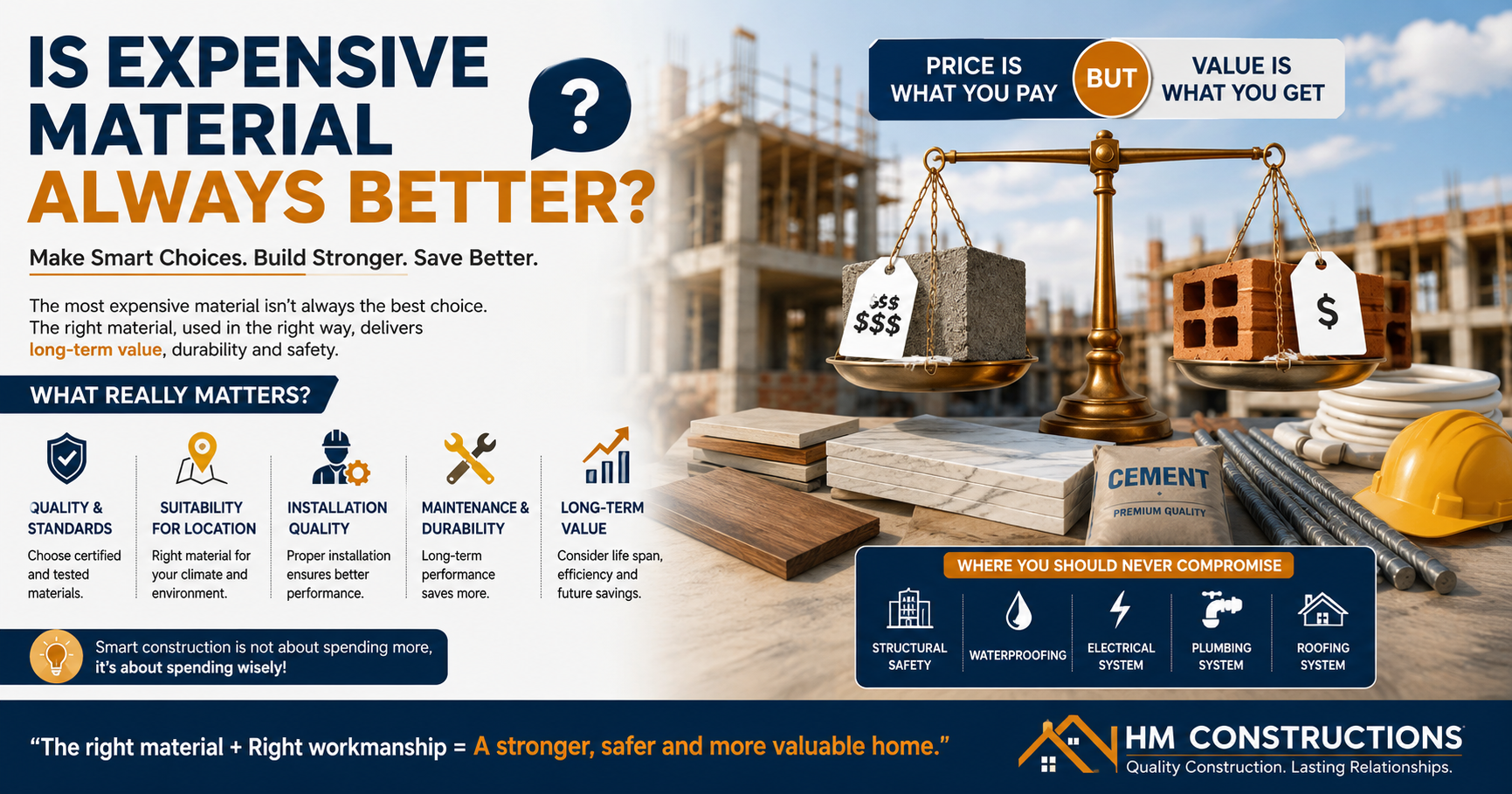
💰 Is Expensive Material Always Better? The Truth Every Homeowner Should Know
When planning a home or commercial construction project, one of the most common questions homeowners ask is:
“Should I always choose the most expensive building materials?”
The simple answer is No.
Higher prices don’t always guarantee better performance. The best choice depends on your project’s requirements, location, quality standards, and long-term value. Smart construction is about selecting materials that offer the right balance of durability, performance, and cost—not simply choosing the most expensive option.
Why Expensive Doesn’t Always Mean Better
Many premium materials cost more because of their brand reputation, imported origin, luxury appearance, or specialized features. However, these features may not be necessary for every project.
For example:
- Premium Italian marble looks elegant but may not be practical for every budget.
- A locally sourced vitrified tile can provide excellent durability, require less maintenance, and cost significantly less.
- Imported fittings may have a premium price, but high-quality Indian brands often deliver comparable performance with easier availability of spare parts and service.
The key is to evaluate performance, durability, maintenance, and suitability, rather than focusing only on price.
Factors That Matter More Than Price
1. Quality Standards and Certifications
Always choose materials that meet recognized quality standards.
Examples include:
- ISI-certified cement and steel
- Quality-tested electrical wiring
- Certified plumbing pipes
- Standardized waterproofing products
Certified materials provide better reliability and safety than uncertified alternatives, regardless of price.
2. Suitability for Your Location
A material that performs well in one region may not be ideal in another.
For example:
- Coastal areas require corrosion-resistant materials.
- High-rainfall regions need superior waterproofing and drainage.
- Hot climates benefit from heat-reflective roofing and insulation.
- Earthquake-prone areas require structurally appropriate materials.
The right material depends on local environmental conditions.
3. Installation Quality Matters More
Even the most expensive material can fail if it is installed incorrectly.
Common issues include:
- Roof leakage due to poor installation
- Cracked tiles because of uneven flooring
- Wall seepage from improper waterproofing
- Loose fixtures caused by poor workmanship
Professional installation often has a greater impact on performance than the price of the material itself.
4. Maintenance Requirements
Some premium materials require regular polishing, sealing, or specialized maintenance.
Before making a decision, ask:
- How often does it need maintenance?
- Are replacement parts easily available?
- What are the annual maintenance costs?
- Will repairs be expensive?
Sometimes a mid-range material offers lower lifetime costs than a premium alternative.
5. Long-Term Value
Instead of focusing on the initial purchase price, consider the total cost over the material’s lifespan.
Ask yourself:
- How long will it last?
- Will it reduce repair costs?
- Does it improve energy efficiency?
- Will it increase the property’s value?
A slightly higher upfront investment in key areas can lead to substantial savings over time.
Where You Should Never Compromise
Certain parts of a building are critical for safety and durability. These should always use high-quality materials.
These include:
- Cement
- Steel reinforcement
- Waterproofing systems
- Structural concrete
- Electrical wiring
- Plumbing pipelines
- Roofing systems
Compromising on these essentials can lead to structural damage, safety risks, and costly repairs.
Where You Can Save Without Sacrificing Quality
There are also areas where homeowners can choose cost-effective options without affecting the building’s overall performance.
Examples include:
- Decorative wall finishes
- Interior paint brands
- False ceiling designs
- Designer tiles
- Decorative lighting
- Modular furniture finishes
Choosing practical alternatives in these areas helps manage the budget while maintaining a quality finish.
Questions Every Homeowner Should Ask Before Buying Materials
Before purchasing any building material, ask:
- Does this material suit my project’s requirements?
- Is it certified and tested?
- What is its expected lifespan?
- Does it require regular maintenance?
- Is after-sales support available?
- Is there a warranty?
- Will it perform well in my local climate?
These questions help you make informed decisions rather than relying solely on price.
Final Thoughts
The success of a construction project isn’t determined by how expensive the materials are—it’s determined by using the right materials in the right places, installed by skilled professionals.
A well-planned construction project combines quality materials, expert workmanship, and thoughtful budgeting to create a home that is safe, durable, and built to last.
If you’re planning your dream home or renovating an existing property, make informed choices rather than expensive ones. The right guidance can help you save money today while protecting your investment for years to come.
Related Articles
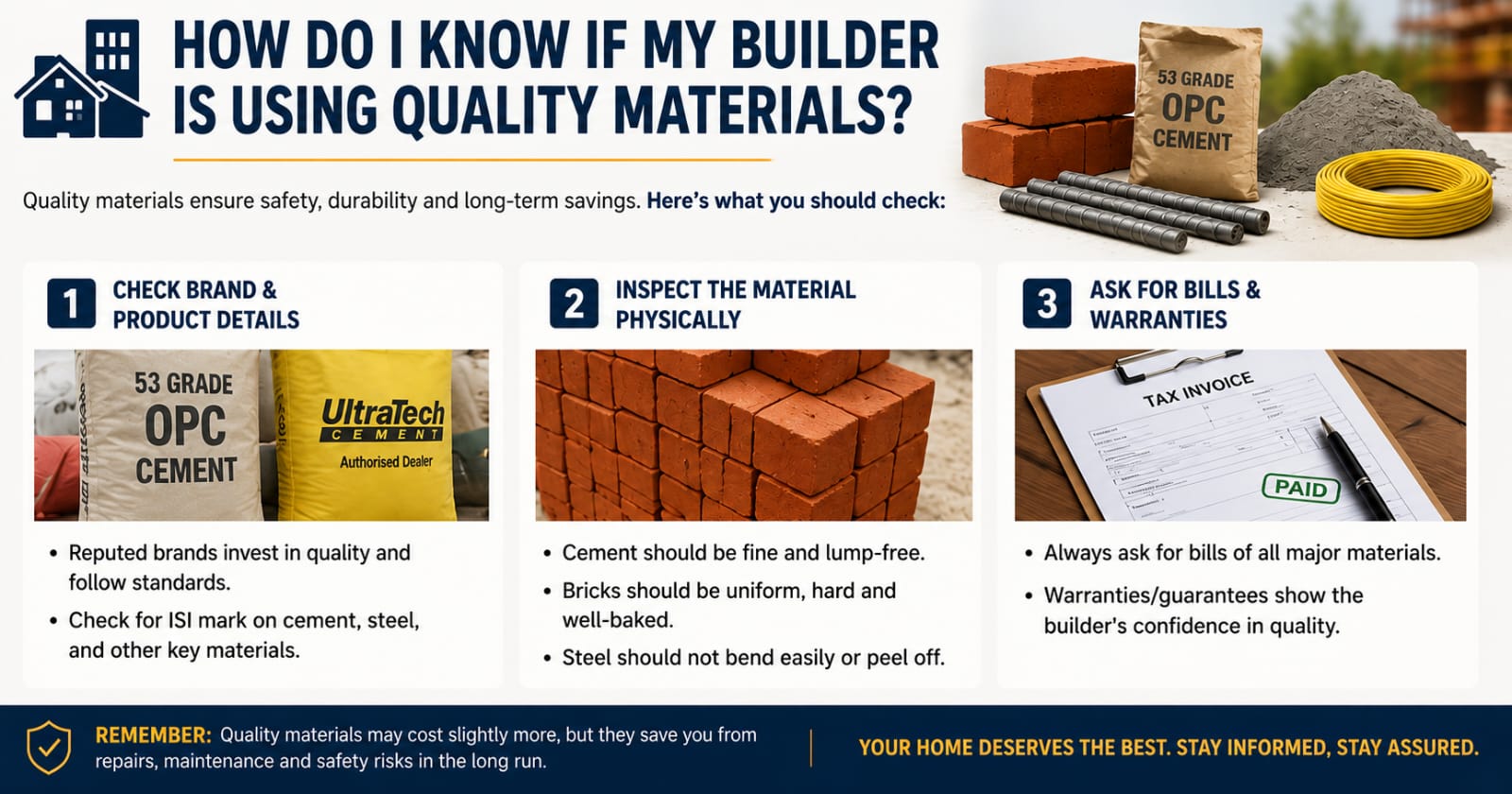
🛡️ How Do I Know If My Builder Is Using Quality Materials?
Building a home or commercial property is one of the biggest investments you'll ever make. While the final fin...
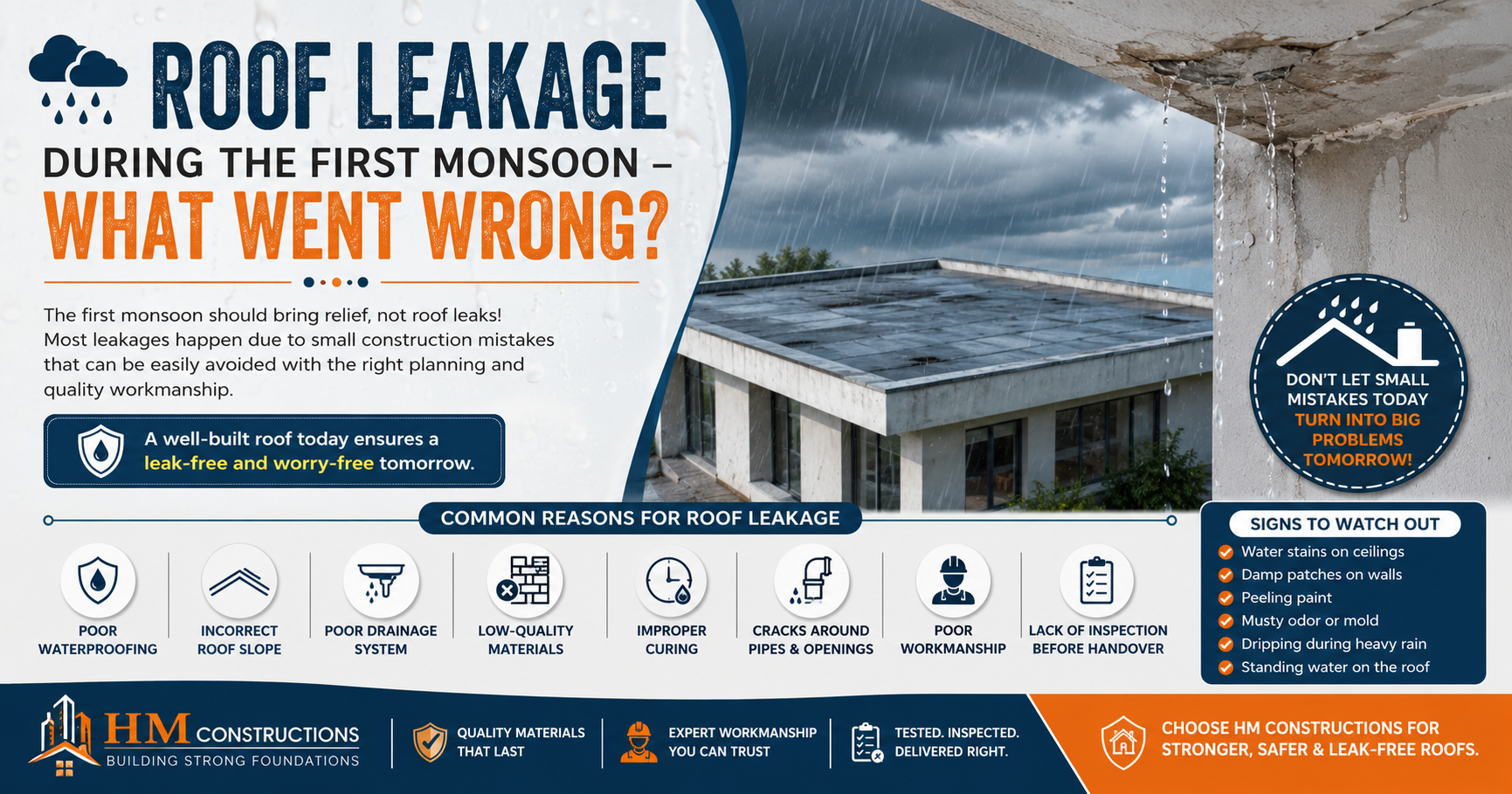
🌧️ Roof Leakage During the First Monsoon – What Went Wrong?
🌧️ Roof Leakage During the First Monsoon – What Went Wrong? The first monsoon after moving into a new home sh...
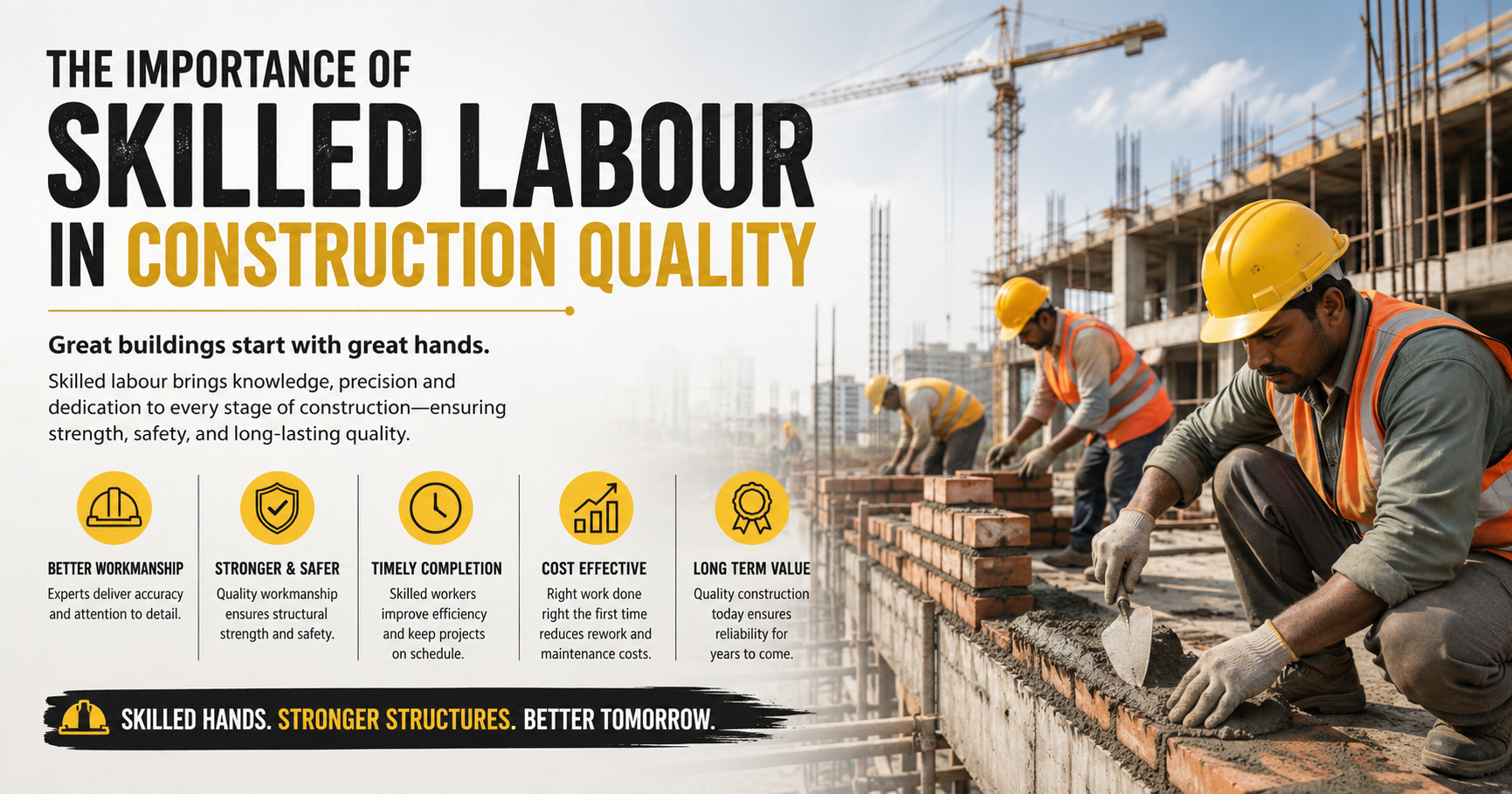
🧑🔧 The Importanceof Skilled Labour in Construction Quality
🧑🔧 The Importance of Skilled Labour in Construction Quality A building is only as strong as the people who ...