
💰 Cheap Construction vs. Cost-Effective Construction: Know the Difference
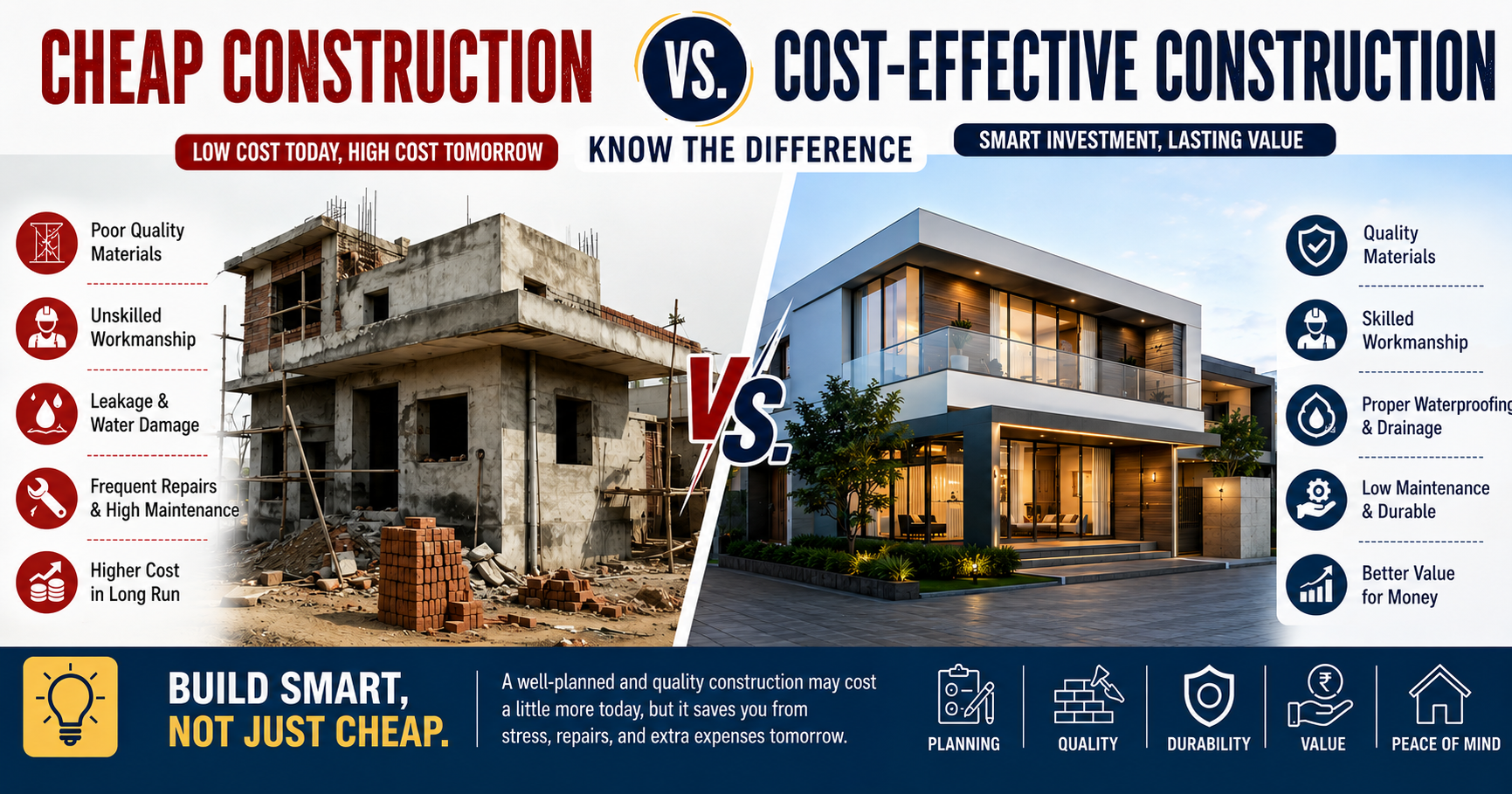
💰 Cheap Construction vs. Cost-Effective Construction: Know the Difference
When planning a new home or commercial building, keeping the construction budget under control is important. However, there is a major difference between building cheaply and building cost-effectively.
Choosing the lowest-priced materials, reducing essential construction processes, or hiring inexperienced workers may save money initially—but these decisions can lead to frequent repairs, higher maintenance expenses, and even structural problems in the future.
Cost-effective construction, on the other hand, focuses on spending money wisely. The goal is to achieve the right balance between quality, durability, functionality, and budget.
🏗️ 1. Material Selection
Cheap Construction: Uses the lowest-cost materials without properly considering their quality, durability, or suitability.
Cost-Effective Construction: Selects reliable materials based on performance and long-term value. It doesn’t always mean choosing the most expensive option—it means choosing the right material for the right application.
🧱 2. Quality of Workmanship
Poor workmanship can result in uneven finishes, cracks, leakage, plumbing problems, and repeated repairs.
Cost-effective construction focuses on skilled workmanship and proper supervision, helping ensure that the work is done correctly the first time and reducing unnecessary rework.
📐 3. Planning Before Construction
Cheap construction often focuses only on reducing today’s expenses.
Cost-effective construction begins with detailed planning, including:
• Accurate budgeting and quantity estimation
• Architectural and structural drawings
• Material planning and procurement
• Electrical and plumbing layouts
• Realistic construction schedules
Good planning helps minimize material wastage, unexpected expenses, and project delays.
💧 4. Waterproofing & Drainage
Waterproofing is one area where cutting costs can become extremely expensive later.
Poor waterproofing may cause damp walls, ceiling leakage, paint damage, mold, and deterioration of building components.
A cost-effective approach invests in proper waterproofing and drainage during construction, helping avoid costly repairs after the building is completed.
⚡ 5. Electrical & Plumbing Systems
Using unsuitable components or poorly planned layouts may reduce initial costs, but concealed electrical and plumbing problems can be difficult and expensive to repair.
Cost-effective construction prioritizes safe installations, appropriate-quality materials, and thoughtful layouts that make future maintenance easier.
💡 The Key Difference
Cheap construction is about spending less today.
Cost-effective construction is about spending wisely for tomorrow.
A well-planned building should not only fit your budget during construction—it should also provide safety, durability, comfort, and manageable maintenance costs for years to come.
🏡 Conclusion
Your building is a long-term investment. Cutting costs in critical areas such as structural work, waterproofing, electrical systems, plumbing, and workmanship may create hidden expenses in the future.
The smarter approach is to identify where you can save without compromising quality and where investing properly is essential.
Related Articles

🛡️ How Do I Know If My Builder Is Using Quality Materials?
Building a home or commercial property is one of the biggest investments you'll ever make. While the final fin...
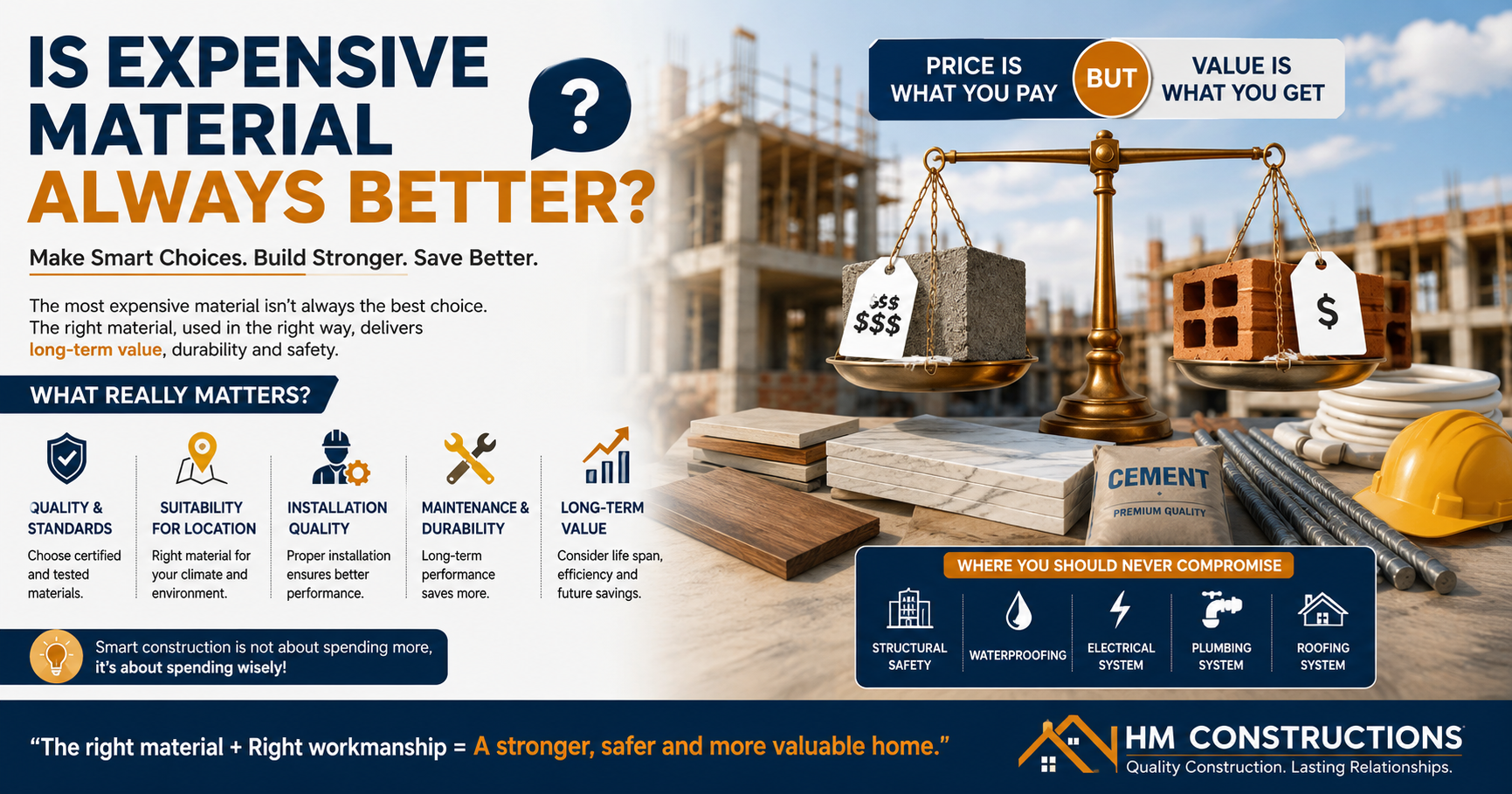
💰 Is Expensive Material Always Better? The Truth Every Homeowner Should Know
💰 Is Expensive Material Always Better? The Truth Every Homeowner Should Know When planning a home or commerci...
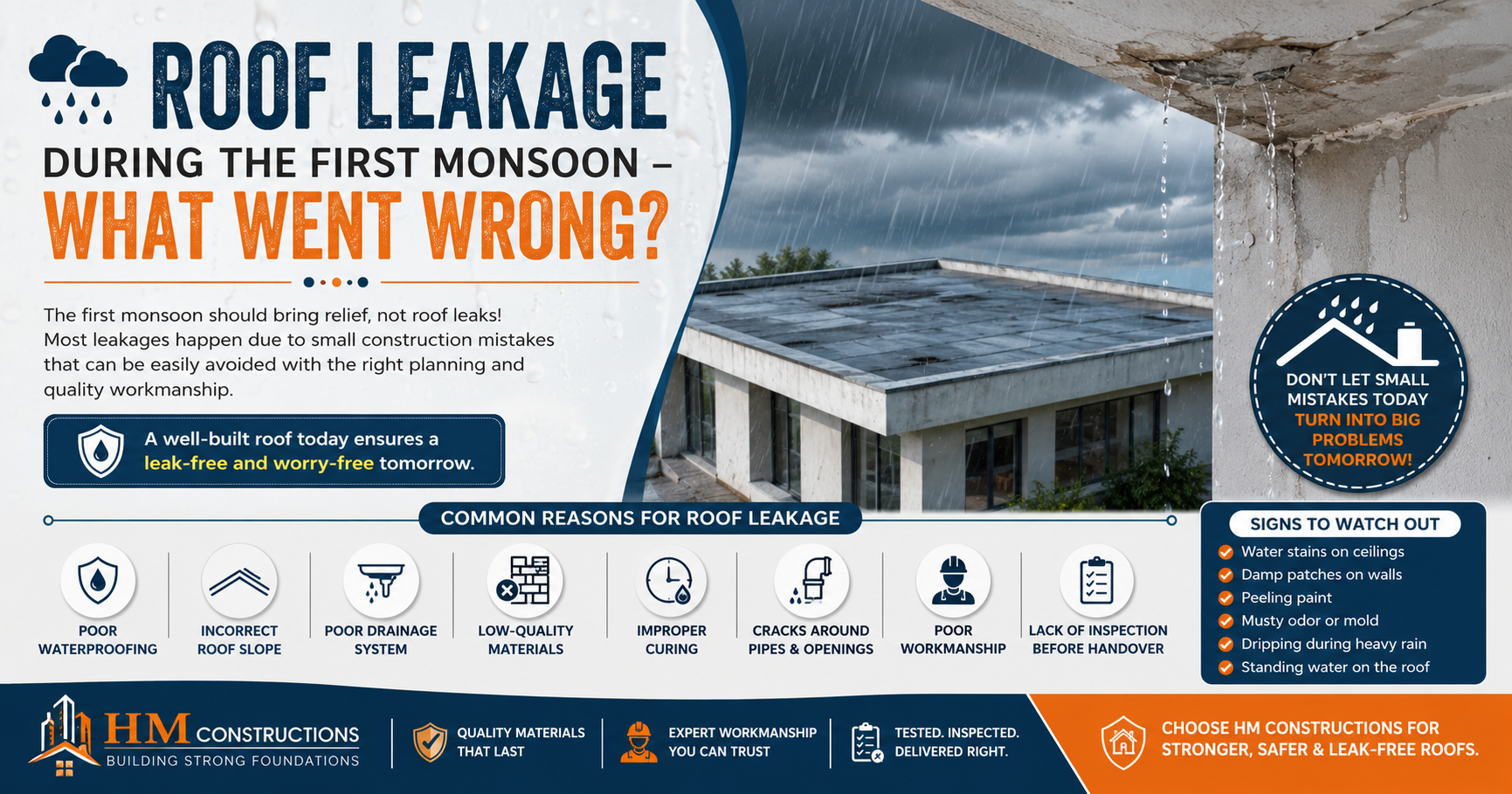
🌧️ Roof Leakage During the First Monsoon – What Went Wrong?
🌧️ Roof Leakage During the First Monsoon – What Went Wrong? The first monsoon after moving into a new home sh...