
🏘️ What Makes One House Last 100 Years While Another Doesn’t?
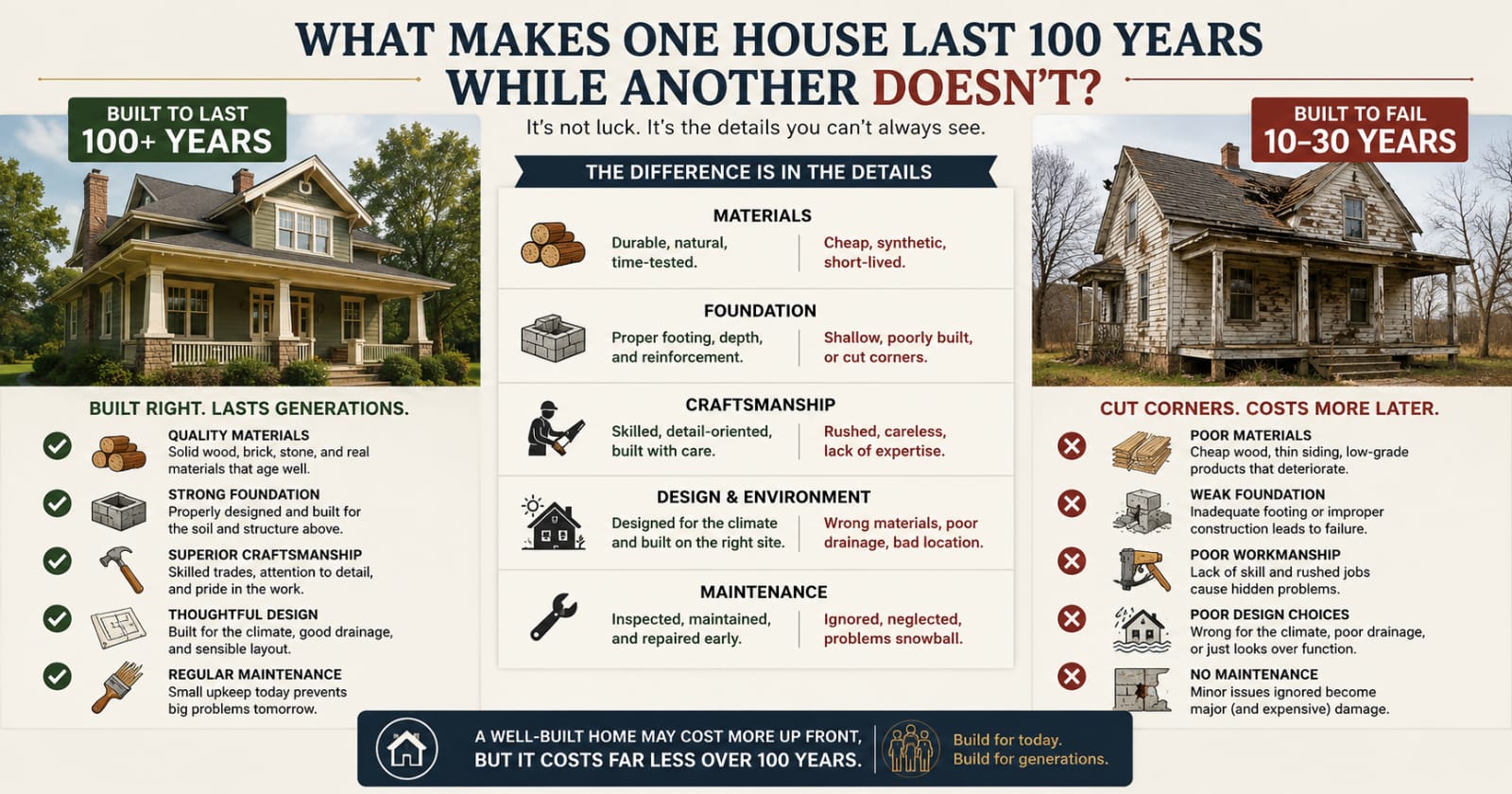
🏘️ What Makes One House Last 100 Years While Another Doesn’t?
A Home Isn’t Measured by How Beautiful It Looks—It’s Measured by How Well It Stands the Test of Time
Many homes begin to develop cracks, leakage, dampness, or structural problems within just 15–20 years, while others remain strong and safe for over a century. The difference isn’t luck—it’s the result of thoughtful planning, quality construction, and proper maintenance.
A long-lasting home starts with decisions made long before the walls are built. From the soil beneath the foundation to the quality of the materials used, every stage of construction contributes to the lifespan of the structure.
Here are the key factors that determine whether a house lasts for decades or generations.
1. 🏗️ A Strong Foundation Is the Backbone of Every Home
The foundation carries the entire weight of the building and transfers it safely to the ground. If it’s poorly designed or built on unsuitable soil, the entire structure can suffer.
Best Practices:
- Conduct a soil investigation before construction.
- Design the foundation according to the soil’s bearing capacity.
- Use quality concrete and properly placed reinforcement.
- Ensure correct curing after concreting.
Why It Matters:
A strong foundation minimizes settlement, prevents structural cracks, and significantly increases the building’s lifespan.
2. 🧱 High-Quality Materials Make All the Difference
Using low-cost or substandard materials may reduce initial expenses, but it often leads to expensive repairs later.
Focus on:
- Certified cement with proper storage.
- High-strength TMT steel from reputable manufacturers.
- Well-burnt bricks or high-quality concrete blocks.
- Clean sand and properly graded aggregates.
- Durable waterproofing products.
Why It Matters:
Quality materials resist weathering, moisture, corrosion, and structural deterioration over time.
3. 👷 Skilled Workmanship Is as Important as Good Materials
Even premium materials cannot compensate for poor workmanship.
Common mistakes include:
- Incorrect reinforcement placement.
- Improper concrete mixing.
- Uneven brick masonry.
- Weak plaster application.
- Inadequate curing.
Why It Matters:
Experienced engineers and skilled workers ensure the construction follows design specifications and industry standards.
4. 💧 Effective Waterproofing Protects the Structure
Water is one of the biggest threats to any building. Moisture can damage concrete, corrode steel reinforcement, weaken walls, and promote mold growth.
Critical waterproofing areas include:
- Roof slabs
- Bathrooms
- Balconies
- Basements
- External walls
- Water tanks
Why It Matters:
Proper waterproofing prevents costly repairs and extends the life of the structure.
5. 🌦️ Climate-Responsive Design Improves Durability
Every region has unique weather conditions that influence building performance.
Examples:
- High rainfall areas require excellent drainage and waterproofing.
- Hot climates benefit from heat-resistant roofing and ventilation.
- Coastal regions need corrosion-resistant materials.
- Cold regions require insulation and moisture protection.
Why It Matters:
Designing for local environmental conditions helps the building perform better over its lifetime.
📌 Key Takeaways
- ✅ Build on a properly designed and tested foundation.
- ✅ Use certified, high-quality construction materials.
- ✅ Prioritize skilled workmanship and professional supervision.
- ✅ Protect the structure with effective waterproofing and drainage.
- ✅ Follow sound structural engineering practices.
- ✅ Maintain the property regularly to prevent long-term damage.
- ✅ Design the home to meet future needs as well as present ones.
-
Conclusion
A house that lasts 100 years is not the result of a single expensive material or a larger budget. It is built through careful planning, sound engineering, quality materials, skilled workmanship, effective waterproofing, and consistent maintenance.
At a construction company, the goal should never be just to complete a project—it should be to create a home that remains safe, functional, and valuable for generations. Investing in quality at every stage of construction is the best way to ensure that your home stands strong for decades to come.
Related Articles
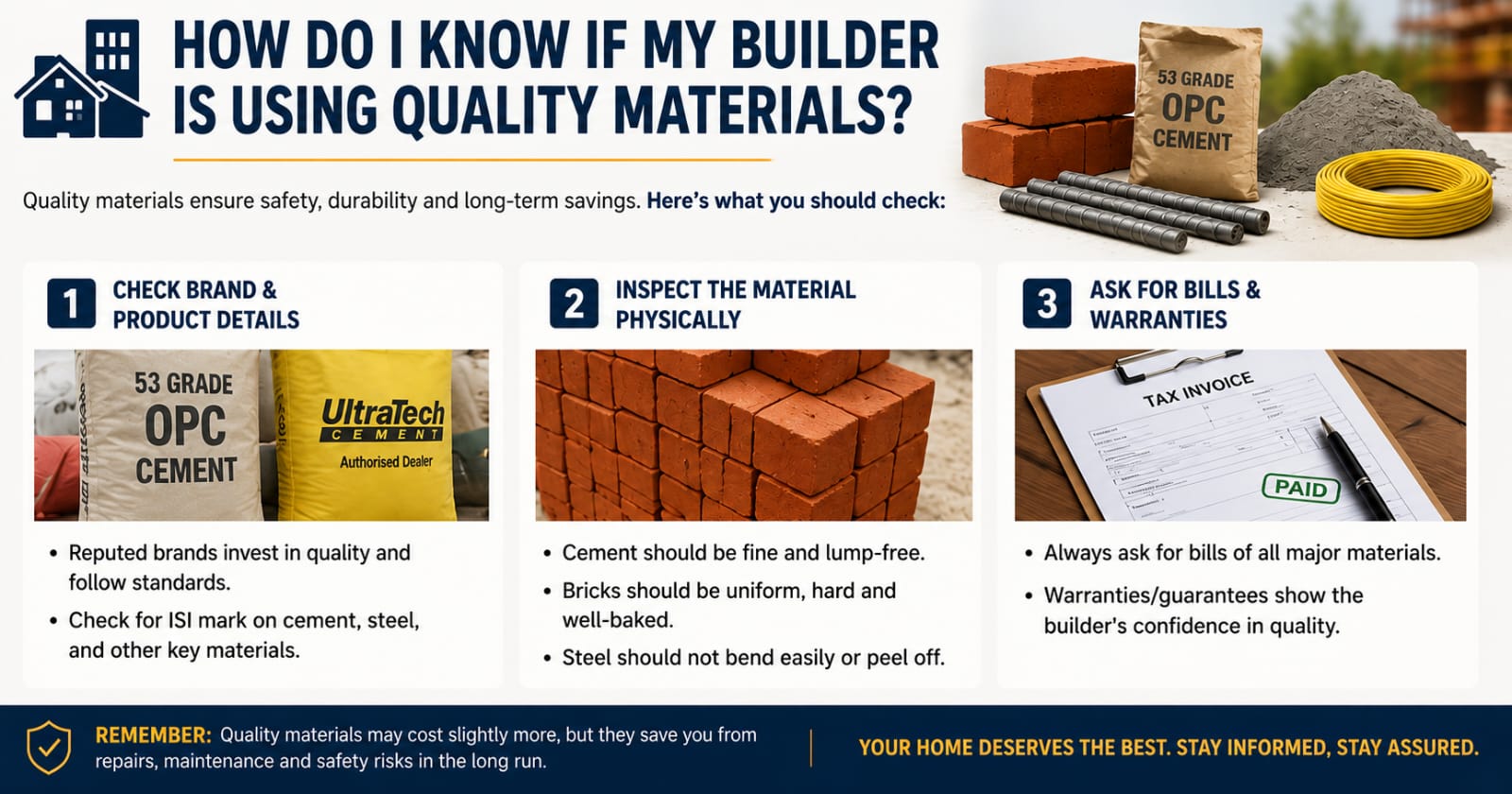
🛡️ How Do I Know If My Builder Is Using Quality Materials?
Building a home or commercial property is one of the biggest investments you'll ever make. While the final fin...
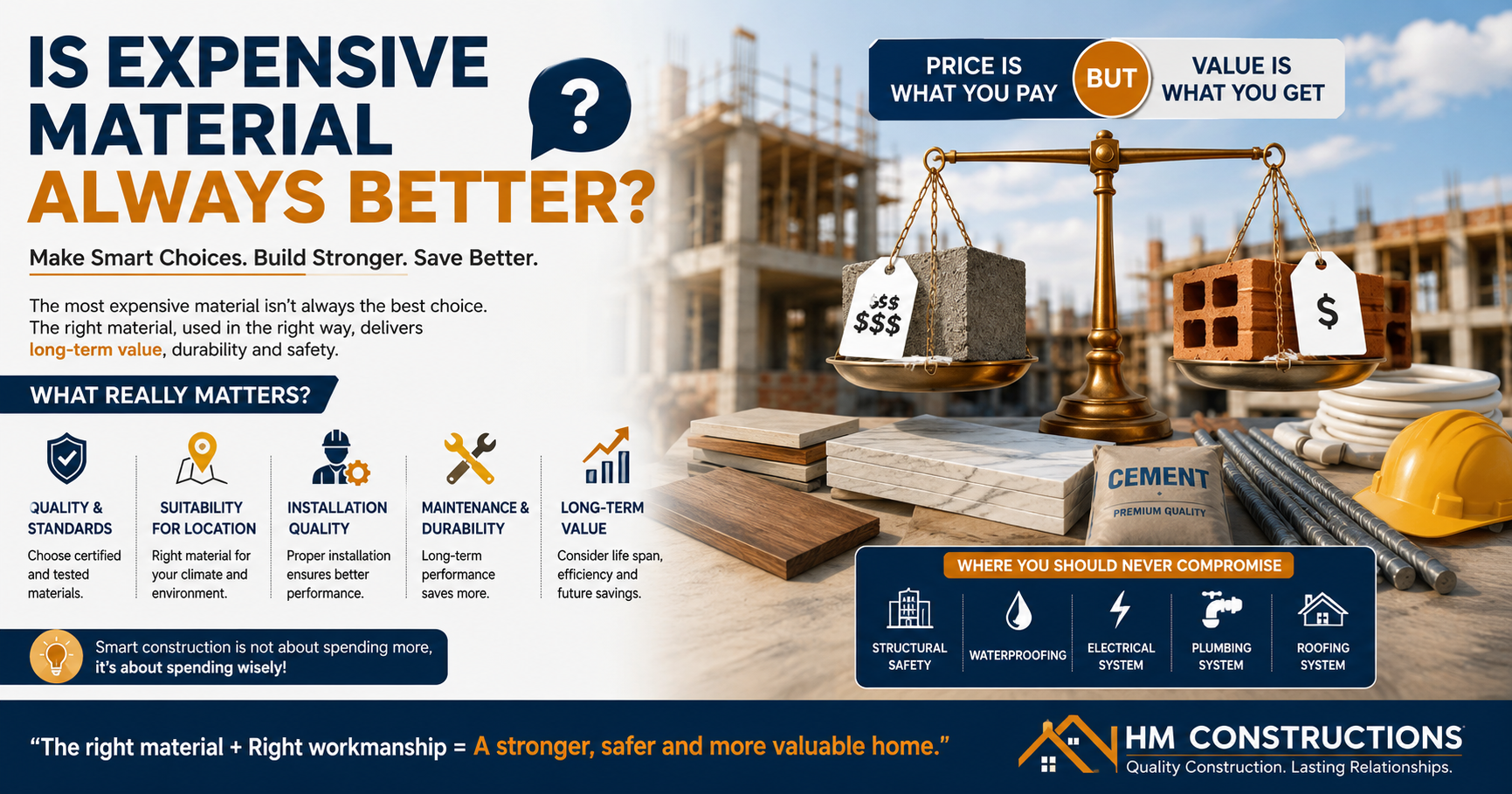
💰 Is Expensive Material Always Better? The Truth Every Homeowner Should Know
💰 Is Expensive Material Always Better? The Truth Every Homeowner Should Know When planning a home or commerci...
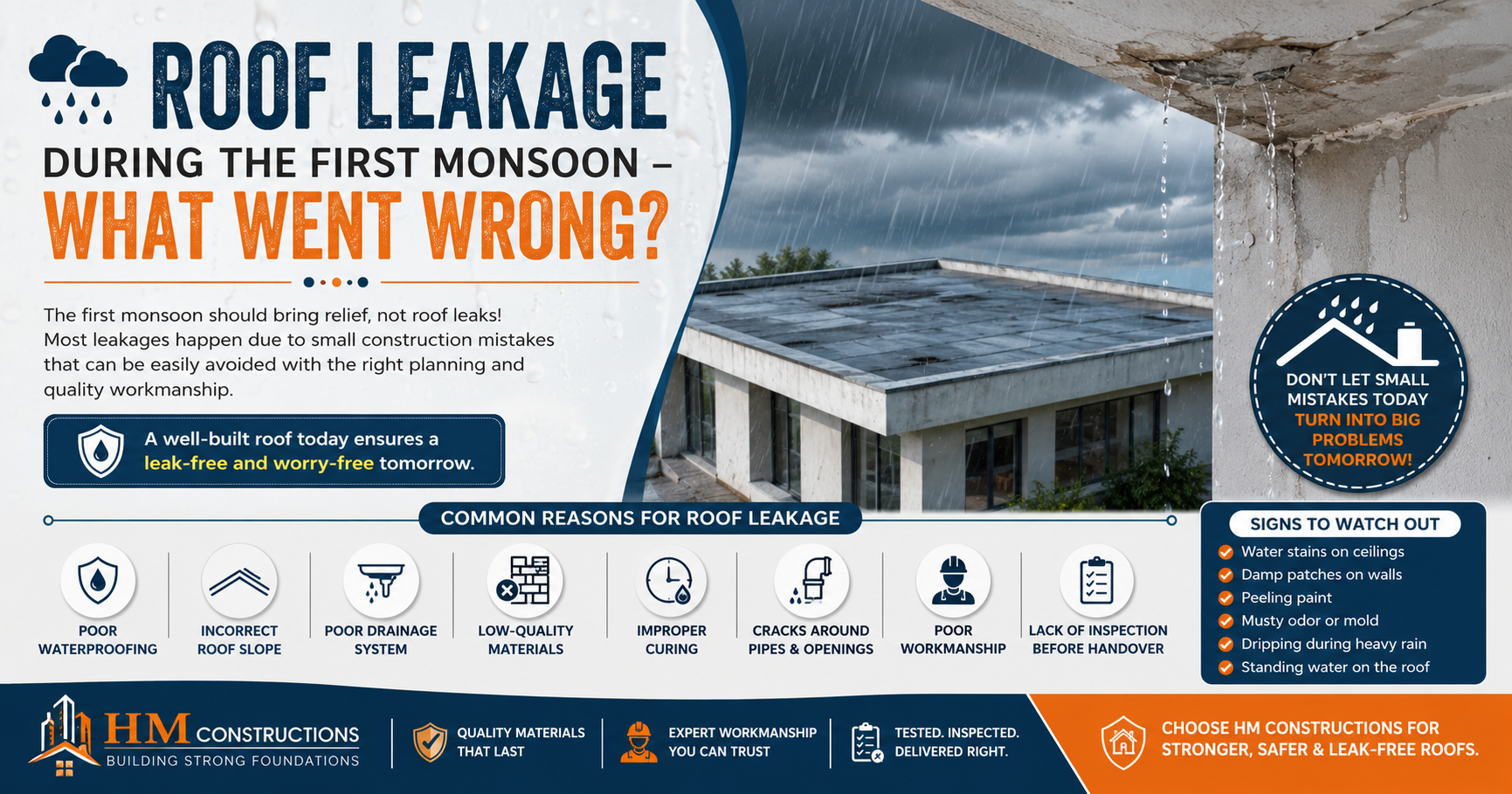
🌧️ Roof Leakage During the First Monsoon – What Went Wrong?
🌧️ Roof Leakage During the First Monsoon – What Went Wrong? The first monsoon after moving into a new home sh...