
Turnkey Construction vs Labour Contract: Which Is Better for Your Dream Home?
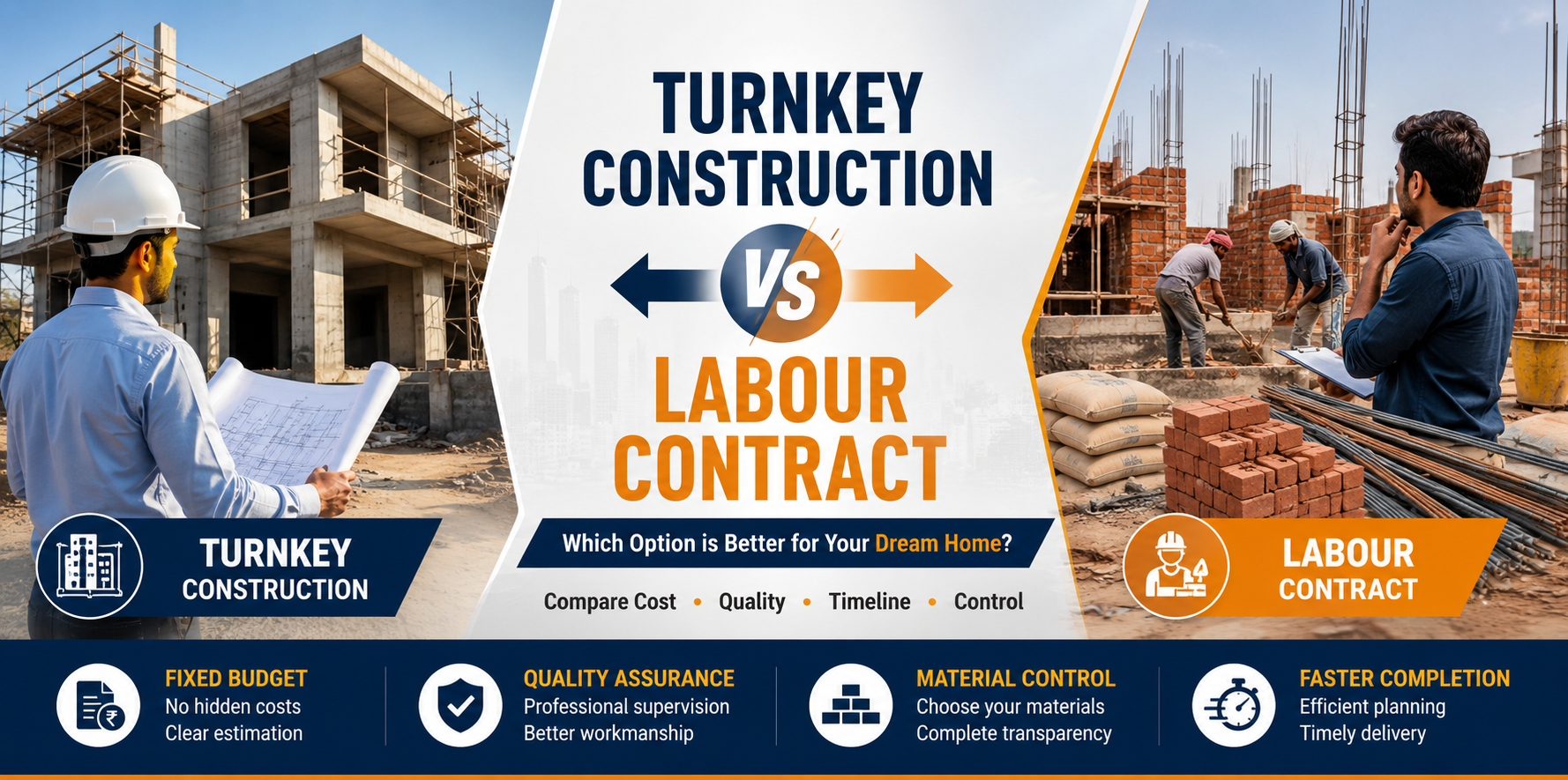
Building a home is one of the most significant investments in a person’s life. Before starting construction, homeowners often face an important decision: Should they choose a Turnkey Construction Contract or a Labour Contract?
Both options have their advantages and limitations. The right choice depends on your budget, availability, expertise, and level of involvement you want in the project. In this blog, we’ll compare both models to help you make an informed decision.
What is Turnkey Construction?
A Turnkey Construction Contract is a comprehensive solution where a construction company handles everything from design, material procurement, labor management, supervision, quality control, and project delivery.
The homeowner simply receives the completed house, ready for occupancy—just like turning a key and moving in.
Services Typically Included:
- Architectural Design
- Structural Design
- Material Procurement
- Labor Management
- Site Supervision
- Quality Assurance
- Electrical & Plumbing Work
- Interior Finishing
- Project Management
What is a Labour Contract?
Under a Labour Contract, the homeowner purchases all construction materials, while the contractor provides only labor and supervision for construction activities.
In this model, the homeowner remains actively involved in sourcing materials, negotiating prices, and managing deliveries.
Services Typically Included:
- Skilled and Unskilled Labor
- Masonry Work
- Carpentry Work
- Plumbing Labor
- Electrical Labor
- Site Execution
Turnkey Construction vs Labour Contract
| Parameter | Turnkey Construction | Labour Contract |
|---|---|---|
| Material Procurement | Handled by Contractor | Handled by Owner |
| Project Management | Contractor Responsible | Owner Responsible |
| Time Commitment | Minimal | High |
| Cost Predictability | High | Moderate |
| Quality Control | Contractor Managed | Owner Managed |
| Risk of Delays | Lower | Higher |
| Material Wastage | Controlled | Depends on Owner |
| Technical Expertise Required | Low | High |
| Convenience | Very High | Moderate |
| Flexibility in Material Selection | Limited to Agreed Specifications | Complete Control |
Advantages of Turnkey Construction
1. Single Point of Responsibility
The contractor takes complete responsibility for project execution, making communication and accountability easier.
2. Time Saving
Homeowners don’t need to spend time purchasing materials or coordinating multiple vendors.
3. Better Project Planning
Experienced construction companies use structured timelines and project management practices, reducing delays.
4. Cost Certainty
Most turnkey contracts are based on a fixed per-square-foot rate, making budgeting easier.
5. Professional Quality Control
Dedicated engineers and supervisors ensure construction quality throughout the project.
Advantages of Labour Contract
1. Greater Control Over Materials
Owners can personally choose brands and specifications for cement, steel, tiles, sanitary fittings, and other materials.
2. Potential Cost Savings
If managed efficiently, homeowners may reduce costs through direct procurement and supplier negotiations.
3. Material Transparency
Every purchase remains under the owner’s control, providing complete visibility into spending.
4. Customization Freedom
Homeowners can make material changes during construction without depending on contractor procurement systems.
Challenges of Turnkey Construction
- Limited flexibility once specifications are finalized.
- Requires careful contractor selection.
- Premium charges may apply for complete project management.
Challenges of Labour Contract
- Requires regular site visits.
- High involvement in material procurement.
- Risk of delays due to material shortages.
- Increased responsibility for quality checks.
- Greater chances of budget overruns.
Cost Comparison Example
For a 2,000 sq. ft. house:
| Particulars | Turnkey Construction | Labour Contract |
| Estimated Cost | ₹40–55 Lakhs | ₹35–50 Lakhs |
| Owner Involvement | Low | High |
| Project Duration | Faster | May Vary |
| Risk Factor | Lower | Higher |
Actual costs depend on location, design complexity, material selection, and market conditions.
Which Option is Better?
Choose Turnkey Construction If:
✅ You have a busy schedule.
✅ You want hassle-free construction.
✅ You prefer a fixed budget.
✅ You lack technical construction knowledge.
✅ You want professional project management.
Choose Labour Contract If:
✅ You have sufficient time for site supervision.
✅ You understand construction materials and processes.
✅ You want complete control over purchases.
✅ You are comfortable coordinating suppliers and workers.
Final Verdict
For most modern homeowners, Turnkey Construction is often the preferred choice because it offers convenience, professional execution, predictable costs, and timely completion.
However, if you have construction knowledge, time for supervision, and want maximum control over materials and spending, a Labour Contract can be a suitable option.
Before making a decision, evaluate your budget, availability, expertise, and project goals. Choosing the right construction model can significantly impact your home’s quality, timeline, and overall experience.
Build Smart, Build Right!
Whether you choose a Turnkey Construction Contract or a Labour Contract, partnering with an experienced and trustworthy construction company is the key to turning your dream home into reality.
Related Articles

🧰 Why Regular Site Inspections Matter
🧰 Why Regular Site Inspections Matter Building Quality Starts with Consistent Supervision Construction is mor...
🧰 Why Hiring a Professional Construction Company Saves Money
🧰 Why Hiring a Professional Construction Company Saves Money Building a home or commercial property is one of...

🌧️ Monsoon Construction: Challenges & Solutions
🌧️ Monsoon Construction: Challenges & Solutions Building Strong Even During the Rainy Season The monsoon ...