
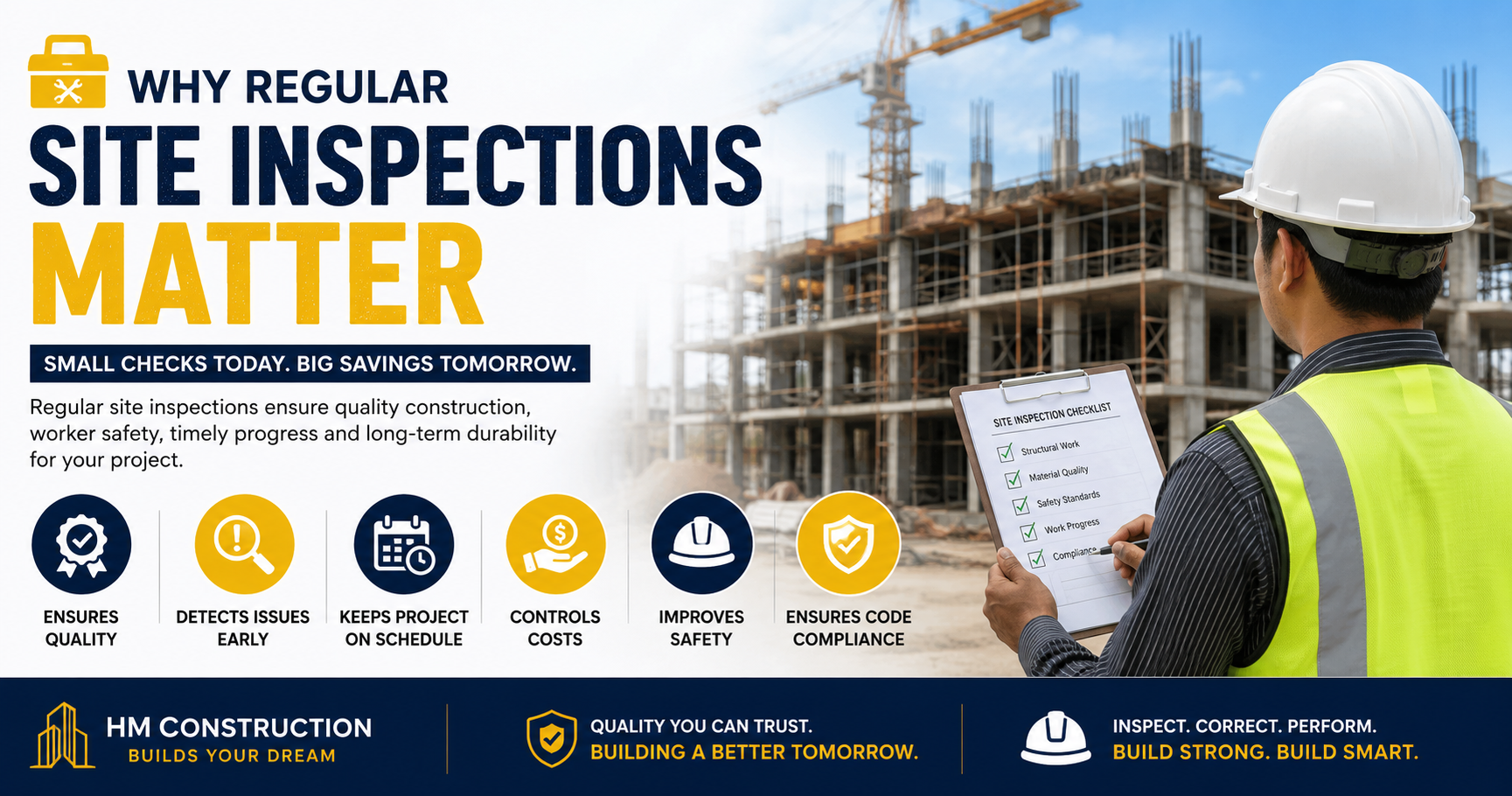
🧰 Why Regular Site Inspections Matter
Building Quality Starts with Consistent Supervision
Construction is more than laying bricks and pouring concrete—it’s a step-by-step process where every stage affects the next. Regular site inspections ensure that work is carried out according to approved drawings, quality standards, and safety regulations. They help identify issues early, minimize costly mistakes, and keep the project on schedule.
Whether you’re constructing a home, commercial building, or industrial facility, routine inspections are one of the most effective ways to protect your investment and ensure a successful outcome.
Why Are Site Inspections Important?
A construction site involves multiple teams, materials, machinery, and activities happening simultaneously. Even a small oversight can lead to delays, quality issues, or expensive repairs.
Regular inspections help:
- Ensure work is progressing as planned.
- Verify that materials meet quality standards.
- Identify errors before they become major problems.
- Maintain worker safety.
- Keep the project within budget and timeline.
Key Benefits of Regular Site Inspections
1. Ensures High Construction Quality
Frequent inspections confirm that every stage of construction follows engineering specifications and approved drawings.
This includes checking:
- Foundation alignment
- Steel reinforcement placement
- Concrete quality
- Brickwork alignment
- Wall plaster finish
- Waterproofing application
High-quality work today prevents expensive repairs tomorrow.
2. Detects Problems Early
Construction mistakes become more expensive as the project progresses.
Regular inspections help identify:
- Uneven foundation levels
- Incorrect reinforcement placement
- Plumbing and electrical clashes
- Water leakage risks
- Structural cracks
- Poor workmanship
Fixing these issues early saves significant time and money.
3. Keeps the Project on Schedule
Routine inspections allow project managers to monitor daily progress and compare it with the planned schedule.
Benefits include:
- Early identification of delays
- Better coordination between contractors
- Faster decision-making
- Improved productivity
This helps avoid unnecessary project extensions.
4. Controls Construction Costs
Site inspections reduce unnecessary expenses by preventing:
- Material wastage
- Rework
- Incorrect installations
- Delay penalties
- Emergency repairs
Preventive inspections are always more cost-effective than corrective repairs.
5. Ensures Material Quality
Not every construction material delivered to the site meets the required specifications.
Regular inspections verify:
- Cement quality and storage
- Steel grade and dimensions
- Brick strength
- Sand cleanliness
- Aggregate quality
- Waterproofing materials
- Paint and finishing products
Using quality materials improves the building’s durability.
6. Improves Worker Safety
Construction sites can be hazardous if safety practices are ignored.
Inspections ensure:
- Proper use of safety helmets and PPE
- Safe scaffolding
- Secure electrical wiring
- Machine safety
- Fire protection measures
- Clean working environment
A safer site reduces accidents and improves productivity.
What Should Be Checked During a Site Inspection?
A professional inspection should cover:
✅ Structural Work
- Excavation depth
- Foundation quality
- Column alignment
- Beam and slab reinforcement
- Concrete curing
✅ Masonry
- Brick quality
- Wall alignment
- Mortar ratio
- Verticality
✅ Electrical Work
- Wiring layout
- Conduit placement
- Earthing
- Switch board locations
✅ Plumbing
- Pipe alignment
- Water pressure testing
- Drainage slope
- Leakage inspection
✅ Waterproofing
- Roof waterproofing
- Bathroom waterproofing
- Basement protection
- Terrace drainage
✅ Finishing Work
- Plaster quality
- Tile alignment
- Paint finish
- Door and window installation
How Often Should Site Inspections Be Conducted?
The frequency depends on the size and complexity of the project.
- Daily: Monitor ongoing work, safety practices, and workforce coordination.
- Weekly: Review construction progress, material quality, and schedule adherence.
- Before major milestones: Inspect foundations, reinforcement, concrete pouring, roofing, waterproofing, and finishing before moving to the next phase.
Regular inspections at critical stages reduce the risk of hidden defects and costly rework.
Long-Term Benefits
Consistent site inspections result in:
- Better construction quality
- Longer building lifespan
- Reduced maintenance costs
- Improved structural safety
- Faster project completion
- Greater customer satisfaction
- Higher property value
Conclusion
Regular site inspections are not just about finding faults—they are about ensuring every stage of construction meets the highest standards of quality, safety, and efficiency. By identifying issues early, verifying material quality, and keeping work aligned with the project plan, inspections help prevent delays, control costs, and deliver a durable, reliable structure.
A well-inspected construction site today becomes a stronger, safer, and more valuable building tomorrow.
Related Articles
🧰 Why Hiring a Professional Construction Company Saves Money
🧰 Why Hiring a Professional Construction Company Saves Money Building a home or commercial property is one of...
🌧️ Monsoon Construction: Challenges & Solutions
🌧️ Monsoon Construction: Challenges & Solutions Building Strong Even During the Rainy Season The monsoon ...
How Good Planning Can Reduce Construction Time
🏗️ How Good Planning Can Reduce Construction Time Every successful construction project starts long before th...