Uncategorized

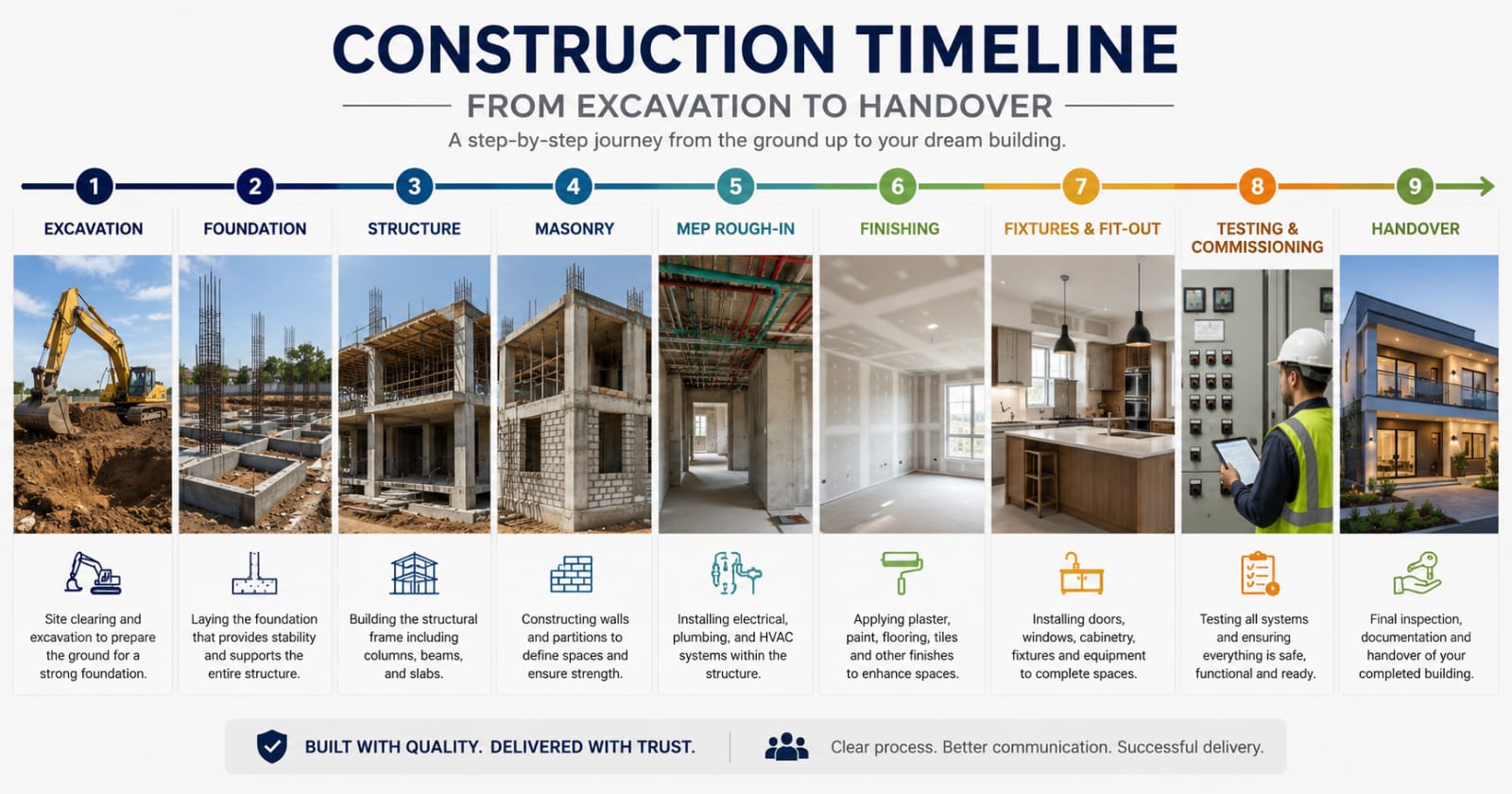
Construction Timeline: From Excavation to Handover

By HM Constructions Team β€’
Construction Timeline: From Excavation to Handover

Construction Timeline: From Excavation to Handover – A Step-by-Step Journey to Building Excellence

Every successful construction project follows a carefully planned timeline. From preparing the land to handing over the keys, each stage plays a vital role in ensuring the building is safe, durable, and completed on schedule. A well-managed construction process minimizes delays, controls costs, and delivers a structure that stands the test of time.

Whether it’s a residential home, commercial building, or industrial project, understanding the construction timeline helps clients stay informed and confident throughout the project.


πŸ—οΈ 1. Site Survey & Planning

Every project begins with a detailed site survey. Engineers and architects assess the land, measure boundaries, analyze topography, and study soil conditions before finalizing the design.

Key Activities:

  • Site inspection
  • Land measurements
  • Soil testing
  • Project planning
  • Budget estimation
  • Approval of architectural drawings

Why It Matters:
A thorough planning stage prevents costly mistakes and ensures the project complies with local building regulations.


🚜 2. Excavation & Site Preparation

After approvals, the site is cleared of debris, vegetation, and obstacles. Excavation work begins according to the structural drawings to prepare for the foundation.

Key Activities:

  • Site clearing
  • Excavation
  • Leveling the ground
  • Temporary fencing
  • Drainage preparation

Professional Tip:
Accurate excavation ensures the foundation sits on stable ground, reducing the risk of settlement or structural failure.


🏒 3. Foundation Construction

The foundation is the backbone of the building. It transfers the structure’s load safely to the ground and provides long-term stability.

Key Activities:

  • PCC (Plain Cement Concrete)
  • Footing construction
  • Reinforcement steel placement
  • Concrete pouring
  • Waterproofing foundation

Unique Point:
A well-designed foundation can significantly increase the lifespan of a building while reducing future maintenance costs.


πŸ—οΈ 4. Structural Framework

Once the foundation gains strength, the structural skeleton of the building begins to take shape.

Key Activities:

  • Columns
  • Beams
  • Slabs
  • Staircases
  • RCC work
  • Concrete curing

Why It’s Important:
This stage determines the structural strength, load-bearing capacity, and overall safety of the building.


🧱 5. Masonry & Wall Construction

Brickwork or blockwork is completed according to the approved layout, creating the internal and external walls.

Key Activities:

  • Brick laying
  • AAC block installation
  • Partition walls
  • Lintels
  • Window openings

Quality Check:
Walls should be perfectly aligned with uniform mortar joints to avoid cracks in the future.

⚑ 6. Plumbing, Electrical & HVAC Installation

Before plastering begins, all concealed services are installed inside walls and floors.

Key Activities:

  • Electrical conduits
  • Water pipelines
  • Drainage systems
  • Internet and CCTV wiring
  • Air conditioning ducts
  • Fire safety pipelines

Unique Point:
Proper planning of utilities reduces future repair work and prevents unnecessary wall demolition.


🎨 7. Plastering & Surface Preparation

Plastering gives walls a smooth finish and protects them from weather damage.

Key Activities:

  • Internal plaster
  • External plaster
  • Ceiling finishing
  • Crack prevention treatment
  • Surface leveling

Professional Tip:
High-quality plastering creates a stronger base for paint and improves the building’s durability.


πŸͺ΅ 8. Flooring, Doors & Windows

As the structure nears completion, finishing materials are installed.

Key Activities:

  • Tile installation
  • Marble or granite flooring
  • Wooden flooring
  • Doors
  • Windows
  • Glass work

Quality Focus:
Proper leveling and alignment ensure long-lasting aesthetics and functionality.


🎨 9. Painting & Interior Finishing

This stage transforms the structure into a comfortable and attractive space.

Key Activities:

  • Primer application
  • Wall painting
  • Ceiling finishing
  • False ceiling
  • Modular kitchen
  • Wardrobes
  • Decorative lighting

Unique Point:
Choosing premium-quality paints and finishes enhances durability while reducing maintenance over time.


🌿 10. External Development & Landscaping

Attention shifts to the surrounding environment to improve functionality and curb appeal.

Key Activities:

  • Boundary walls
  • Driveways
  • Parking areas
  • Landscaping
  • Garden development
  • Outdoor lighting
  • Drainage systems

Why It Matters:
A well-designed exterior adds value, improves accessibility, and creates a positive first impression.


βœ… 11. Final Inspection & Quality Assurance

Before handover, every aspect of the project undergoes rigorous quality checks.

Inspection Includes:

  • Structural quality
  • Plumbing tests
  • Electrical testing
  • Waterproofing inspection
  • Paint quality
  • Door and window operation
  • Safety compliance
  • Cleaning

Professional Tip:
A detailed snag list is prepared and all identified issues are resolved before project completion.


πŸ”‘ 12. Project Handover

The final stage is handing over the completed project to the client.

Delivered Documents:

  • Completion certificate
  • Warranty documents
  • Electrical and plumbing layouts
  • Maintenance guidelines
  • Material specifications
  • Final project report

Unique Point:
A professional handover includes a walkthrough with the client, ensuring they understand the building’s systems, maintenance requirements, and warranty coverage.


⭐ Best Practices That Ensure Project Success

  • Plan every stage before construction begins.
  • Use certified and high-quality building materials.
  • Conduct regular quality inspections.
  • Follow all safety regulations on-site.
  • Maintain clear communication with clients.
  • Monitor project progress with a defined schedule.
  • Keep detailed documentation of every milestone.
  • Never compromise on structural quality for speed.

πŸ“Œ Conclusion

A successful construction project is much more than bricks and concreteβ€”it is the result of careful planning, skilled workmanship, strict quality control, and effective project management. From the first excavation to the final handover, every stage contributes to creating a safe, durable, and visually appealing structure.

Understanding the construction timeline helps clients make informed decisions, track project progress, and appreciate the expertise required to bring a vision to life. At every step, the focus should remain on quality, transparency, safety, and timely execution, ensuring a building that delivers value for generations to come.

Related Articles