
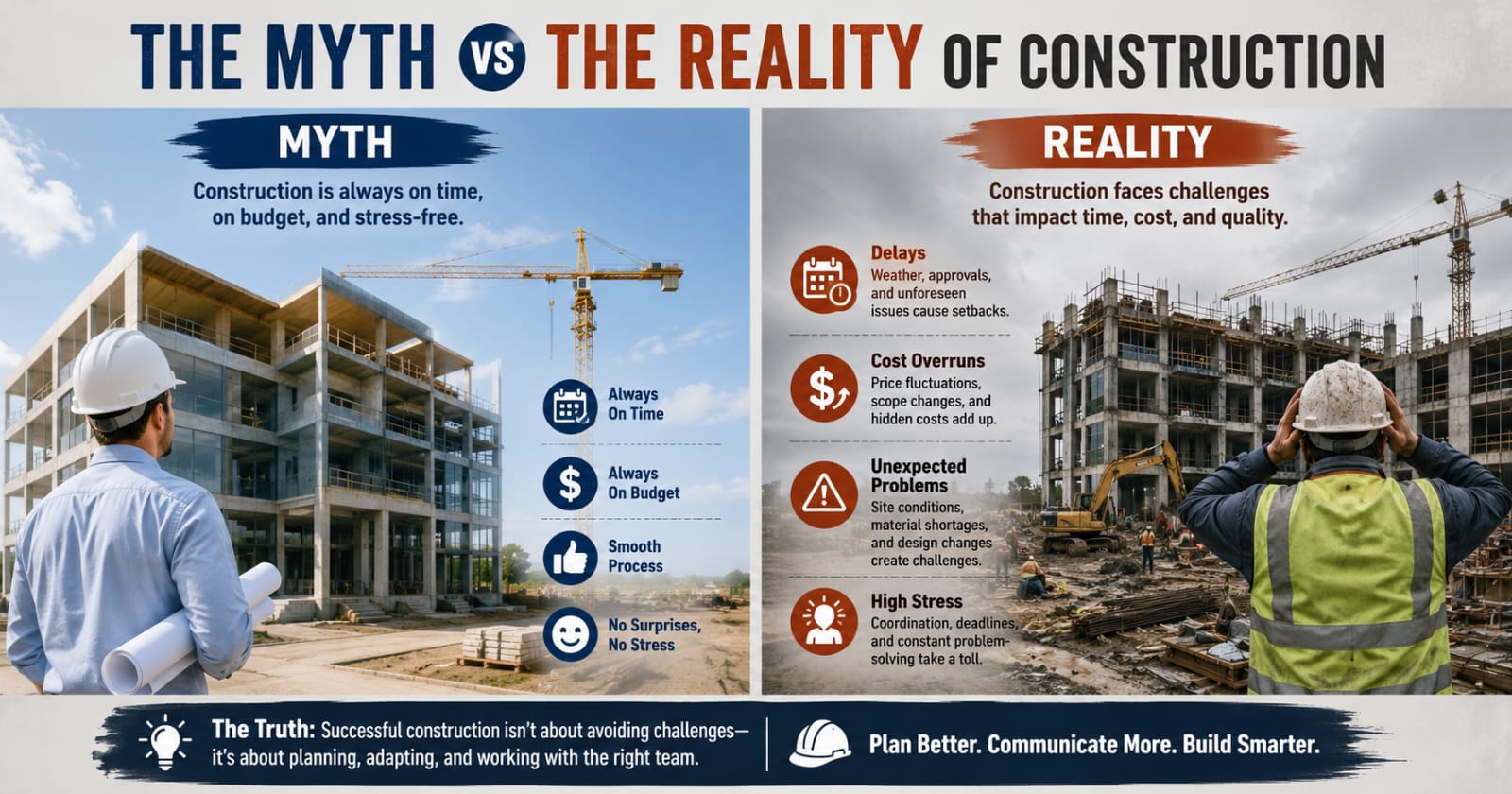
⚠️ Construction Myths vs Reality: Separating Facts from Fiction
Many people begin a construction project with advice from friends, relatives, or information found online. While some of it is helpful, many common beliefs are actually myths that can lead to poor decisions, higher costs, and long-term problems.
Understanding the difference between myths and reality helps homeowners and business owners make informed choices, ensuring their investment is safe, durable, and cost-effective.
🏗️ Myth 1: Expensive Materials Always Mean Better Quality
❌ Myth
The more expensive the material, the stronger and better the building will be.
✅ Reality
Price alone does not determine quality. The right material should match the project’s design, location, climate, and structural requirements. Premium materials used incorrectly can still fail, while standard, certified materials installed properly can deliver excellent performance.
Key Takeaway:
Always choose certified materials that suit your project rather than simply selecting the most expensive option.
👷 Myth 2: Construction Can Be Completed Much Faster Without Any Issues
❌ Myth
A project can always be completed quickly if more workers are hired.
✅ Reality
Construction follows a sequence where each stage depends on the previous one. Processes such as concrete curing, waterproofing, and inspections require sufficient time. Rushing these stages may lead to cracks, leaks, and reduced structural strength.
Key Takeaway:
A realistic timeline ensures better quality and fewer future repairs.
🧱 Myth 3: A Beautiful Finish Means Good Construction
❌ Myth
If the paint, tiles, and interiors look attractive, the building must be well constructed.
✅ Reality
The real strength of any building lies in its foundation, structural framework, reinforcement, and construction quality. Attractive finishes can hide poor workmanship temporarily but cannot compensate for structural weaknesses.
Key Takeaway:
Strong construction begins with quality engineering—not just beautiful interiors.
🌧️ Myth 4: Waterproofing Is Optional
❌ Myth
Waterproofing can be skipped to reduce construction costs.
✅ Reality
Waterproofing protects roofs, basements, bathrooms, balconies, and exterior walls from water damage. Ignoring it often results in seepage, mold growth, damp walls, corrosion of steel reinforcement, and expensive repairs later.
Key Takeaway:
Investing in waterproofing during construction is far more economical than repairing water damage after completion.
💰 Myth 5: The Lowest Quote Is Always the Best Deal
❌ Myth
Choosing the contractor with the lowest quotation saves money.
✅ Reality
Very low quotations may exclude important items, use inferior materials, or reduce supervision and quality checks. These shortcuts can increase maintenance costs over the building’s lifetime.
Key Takeaway:
Evaluate contractors based on experience, transparency, quality standards, and completed projects—not price alone.
🏠 Myth 6: No Site Visits Are Needed Once Construction Begins
❌ Myth
After hiring a contractor, the owner doesn’t need to visit the site.
✅ Reality
Regular site inspections help monitor progress, ensure quality, clarify design decisions, and identify issues before they become expensive to fix.
Key Takeaway:
Active client involvement leads to smoother execution and better project outcomes.
📐 Myth 7: Every Construction Project Is the Same
❌ Myth
If one house costs a certain amount, every similar house should cost the same.
✅ Reality
Every project differs in soil conditions, design complexity, location, material selection, labor costs, regulations, and finishing requirements.
Key Takeaway:
Each construction project requires a customized budget and execution plan.
🔩 Myth 8: More Steel Means a Stronger Building
❌ Myth
Adding extra steel reinforcement automatically makes the structure stronger.
✅ Reality
Structural engineers calculate reinforcement according to load requirements and building codes. Excessive steel can create congestion, making concrete placement difficult and potentially reducing structural performance.
Key Takeaway:
Strength comes from proper structural design—not simply adding more material.
🌱 Myth 9: Sustainable Construction Is Too Expensive
❌ Myth
Eco-friendly construction significantly increases the overall project cost.
✅ Reality
While some green solutions have higher initial costs, features like energy-efficient lighting, insulation, rainwater harvesting, and solar systems often reduce operating expenses and improve long-term value.
Key Takeaway:
Sustainable construction is an investment that delivers savings over the life of the building.
📋 Myth 10: Once Construction Is Finished, No Maintenance Is Required
❌ Myth
A newly constructed building will remain in perfect condition without maintenance.
✅ Reality
Every building requires periodic inspections, cleaning, waterproofing checks, repainting, plumbing maintenance, and electrical servicing to maintain performance and safety.
Key Takeaway:
Preventive maintenance extends a building’s lifespan and reduces costly repairs.
🌟 Expert Tips for a Successful Construction Project
- ✔️ Conduct soil testing before foundation work.
- ✔️ Hire experienced and licensed professionals.
- ✔️ Use certified materials from trusted suppliers.
- ✔️ Never compromise on structural quality.
- ✔️ Inspect work at every major milestone.
- ✔️ Prioritize safety on the construction site.
- ✔️ Plan a realistic budget with a contingency reserve.
- ✔️ Maintain clear communication with your contractor.
- ✔️ Keep proper documentation throughout the project.
- ✔️ Think long-term—invest in quality instead of quick fixes.
📌 Conclusion
Construction is one of the most important investments you’ll make, and misconceptions can lead to costly mistakes. Separating myths from reality allows you to make informed decisions, avoid unnecessary expenses, and ensure your project is built on a foundation of quality and trust.
A successful construction project is not defined by speed or appearance alone—it is built through careful planning, skilled workmanship, quality materials, regular inspections, and attention to every detail. When you focus on facts rather than assumptions, you create a building that is safe, durable, and designed to serve for generations.
💡 Remember: Great buildings aren’t created by shortcuts—they’re built with knowledge, precision, and a commitment to quality.
Related Articles
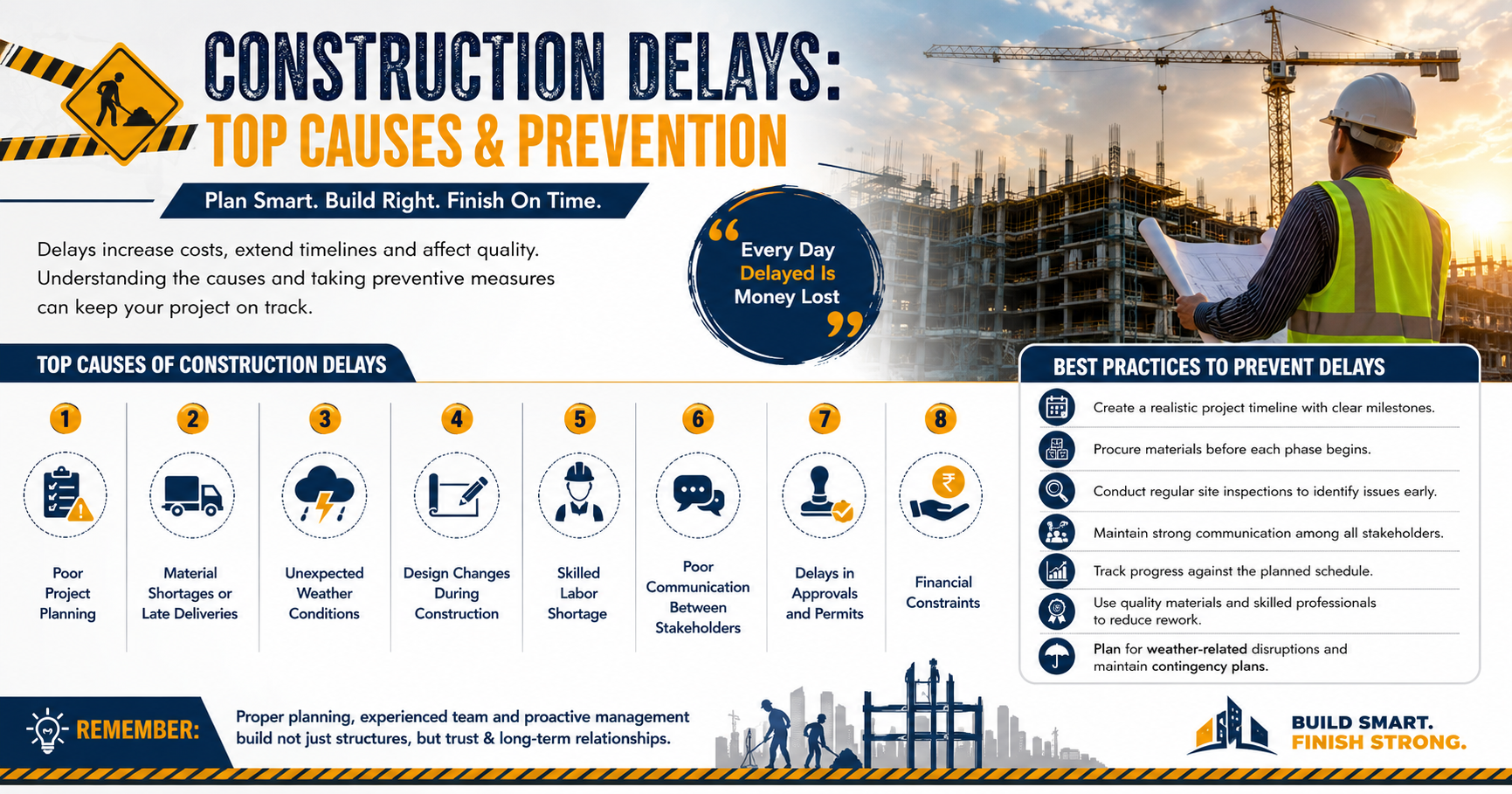
🚧 Construction Delays: Top Causes and Prevention
🚧 Construction Delays: Top Causes and Prevention Every Day Delayed Is Money Lost Construction projects rarely...
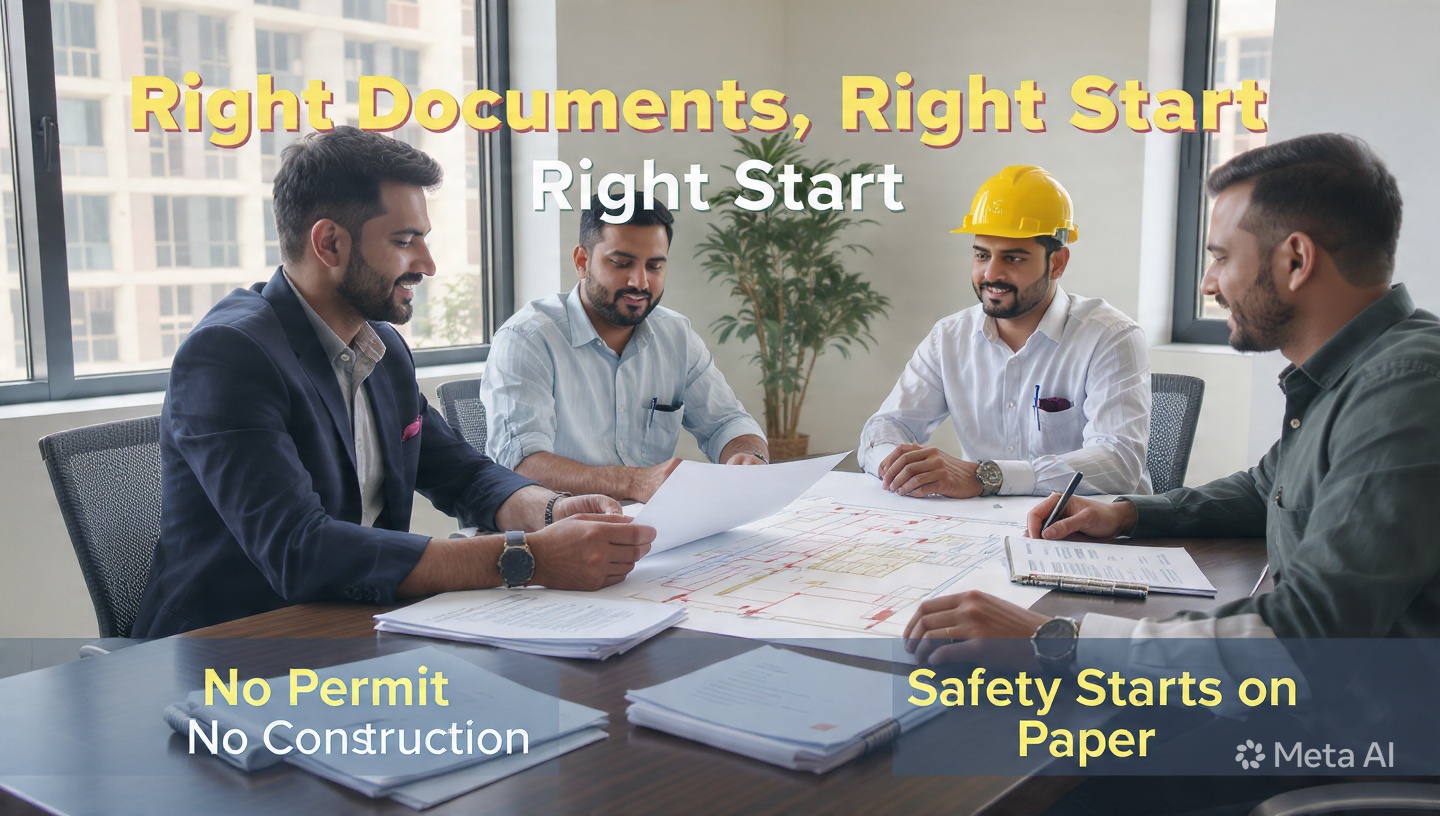
📋 Essential Documents Before Construction Starts
📋 Essential Documents Before Construction Starts: A Complete Checklist for Every Property Owner Starting a co...
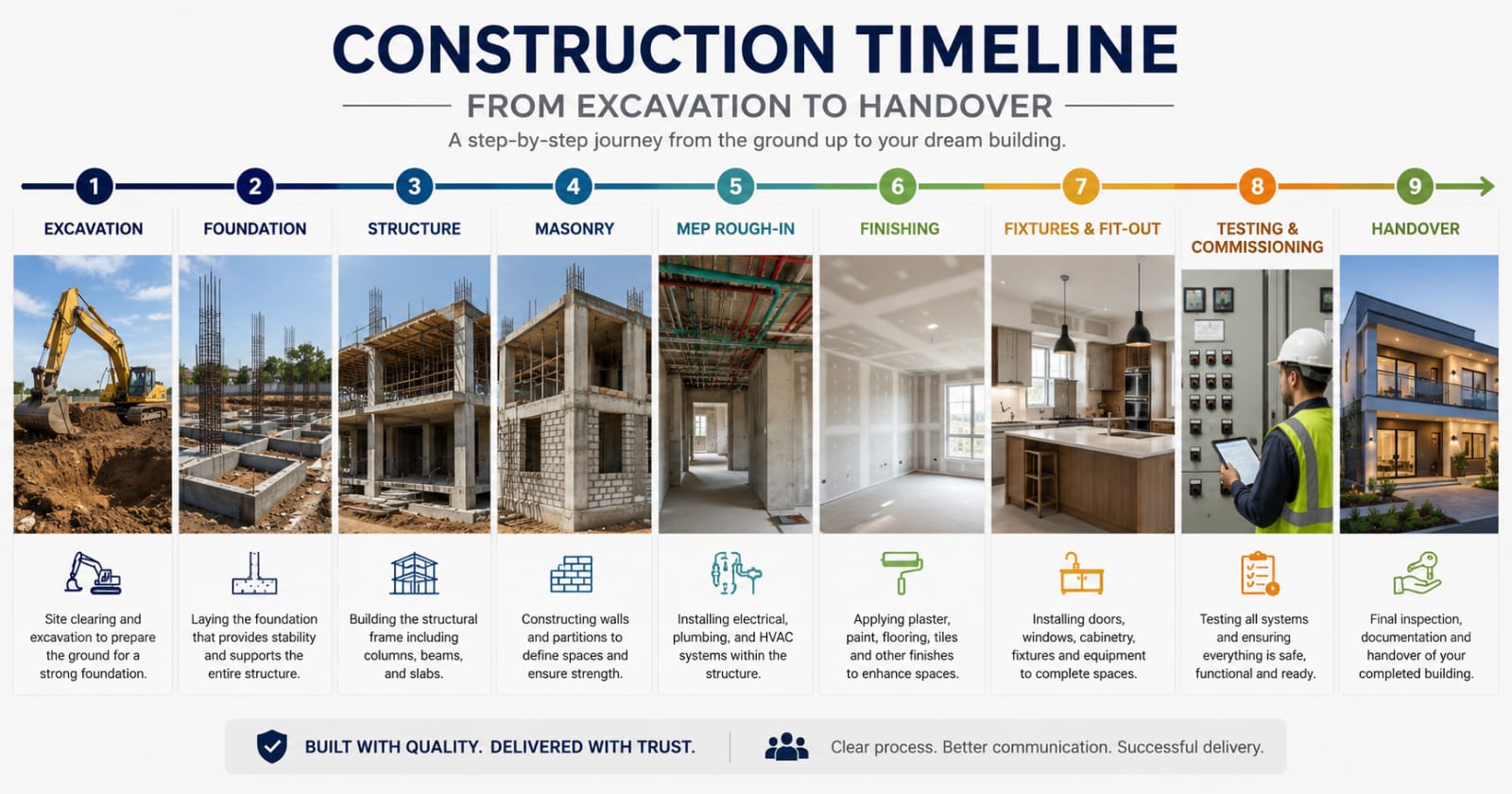
Construction Timeline: From Excavation to Handover
Construction Timeline: From Excavation to Handover – A Step-by-Step Journey to Building Excellence Every succe...